Cooling System
Beginner → Intermediate · 12 questions
Test your knowledge of how engine cooling works and how to diagnose overheating, stuck thermostats, head-gasket failure, and coolant problems.
-
1. What is the water pump's job in the cooling system?
- A. To circulate coolant through the engine and radiator ✓
- B. To raise the boiling point of the coolant
- C. To open and close based on engine temperature
- D. To store extra coolant when the engine is cold
Answer: A — To circulate coolant through the engine and radiator. The water pump (usually belt- or chain-driven, sometimes electric) is the circulating pump that pushes coolant through the block, cylinder head, and radiator so heat is carried away from the engine and dumped to the air. Raising the boiling point is the pressure cap's job; opening/closing on temperature is the thermostat; storing coolant is the reservoir/overflow tank. A failed water pump (leaking seal or eroded impeller) causes overheating because coolant stops moving.
-
2. What does the thermostat do in a normal warm-up?
- A. Stays open all the time to keep the engine as cool as possible
- B. Stays closed until the engine reaches operating temperature, then opens to let coolant flow to the radiator ✓
- C. Pressurizes the system so the coolant can get hotter without boiling
- D. Spins the cooling fan once the engine is warm
Answer: B — Stays closed until the engine reaches operating temperature, then opens to let coolant flow to the radiator. The thermostat is a temperature-controlled valve. When the engine is cold it stays closed, blocking flow to the radiator so the engine warms up quickly. Once coolant reaches its rated opening temperature (commonly around 195°F / 90°C, though some vehicles run hotter or cooler), it opens and lets coolant circulate to the radiator to hold a steady operating temperature. Fast warm-up matters for fuel economy, emissions, and cabin heat.
-
3. A thermostat that is stuck CLOSED will most likely cause:
- A. The engine to run cold and never reach full temperature
- B. Poor cabin heat with a perfectly normal temp gauge
- C. Overheating, because coolant can't flow to the radiator ✓
- D. A check-engine light for the cooling fan circuit
Answer: C — Overheating, because coolant can't flow to the radiator. Stuck closed means the valve never opens, so hot coolant is trapped in the engine and can't reach the radiator to shed heat. The result is overheating, often fast and severe once you're under load or sitting in traffic. A classic clue is an upper radiator hose that stays cold while the engine gauge climbs, because no hot coolant is reaching the radiator. (Running cold is the opposite fault — a thermostat stuck open.)
-
4. A thermostat stuck OPEN typically causes which symptoms, and which code is most associated with it?
- A. Overheating and coolant loss; P0301
- B. No symptoms because an open thermostat is harmless; P0420
- C. Hard starting and a rich-running condition; P0171
- D. Engine runs cold, weak cabin heat, and often P0128 ✓
Answer: D — Engine runs cold, weak cabin heat, and often P0128. Stuck open means coolant flows to the radiator all the time, so the engine never warms up properly. You get a low or slow-to-rise temp gauge, lukewarm cabin heat, worse fuel economy and emissions, and frequently P0128 ('coolant temperature below thermostat regulating temperature') — the PCM noticed the engine didn't reach expected temp in the expected time. For reference, P0301 is a cylinder-1 misfire, P0420 is catalyst efficiency, and P0171 is a lean fuel-trim code — none of which describe a stuck-open thermostat. Replacing the thermostat is the usual fix.
-
5. Why is there a pressure cap on the radiator or coolant reservoir?
- A. To raise the coolant's boiling point by keeping the system pressurized ✓
- B. To keep dirt out of the coolant
- C. To bleed all pressure out of the system continuously while driving
- D. To regulate how fast the water pump spins
Answer: A — To raise the coolant's boiling point by keeping the system pressurized. Raising the pressure raises the boiling point. A typical cap holds around 13–16 psi, and each pound of pressure raises the boiling point very roughly 3°F, so a 50/50 coolant mix can safely run well above its unpressurized boiling point without flashing to steam. The cap also has a relief valve that vents to the overflow tank only when pressure exceeds its rating, and a vacuum valve that draws coolant back as the engine cools — but its core purpose is keeping the system pressurized. A weak cap that won't hold pressure can let coolant boil and overflow even when the system is otherwise healthy.
-
6. It's a hot day, the engine is at operating temperature, and you need to check the coolant level. What is the safe procedure?
- A. Open the cap quickly so less steam escapes
- B. Wait for the engine to cool down, then open the cap slowly with a rag over it ✓
- C. Rev the engine first to push coolant down, then open the cap
- D. Open the cap immediately so you can check the level while it's hot
Answer: B — Wait for the engine to cool down, then open the cap slowly with a rag over it. A hot cooling system is pressurized and the coolant is above its normal (unpressurized) boiling point. Cracking the cap suddenly drops the pressure, and the superheated coolant can flash to steam and erupt, causing serious burns. Always let the engine cool first; if you absolutely must open it warm, go slowly with a thick rag to vent pressure gradually and keep your face and hands clear. This is the single most important cooling-system safety rule.
-
7. Which set of symptoms most strongly points to a blown head gasket?
- A. A squealing belt and a slightly low temp gauge
- B. A cold upper radiator hose and a fast warm-up
- C. Sweet-smelling white exhaust, overheating, and coolant that disappears with no visible external leak ✓
- D. Clear exhaust, normal temperature, and a dripping water-pump weep hole
Answer: C — Sweet-smelling white exhaust, overheating, and coolant that disappears with no visible external leak. A failed head gasket can let coolant into the combustion chamber, where it burns off as sweet-smelling white vapor from the tailpipe (more than normal cold-start condensation, and it lingers after the engine is warm). It can also let combustion gases into the coolant, causing overheating and bubbling, or push coolant into the oil (a milky residue). The tell-tale combination is coolant loss with no puddle on the ground — it's going out the exhaust or into the oil rather than leaking externally. A dripping water-pump weep hole, by contrast, points to the water pump, not the head gasket.
-
8. A reliable shop test for combustion gases leaking into the coolant (a head-gasket sign) is to:
- A. Measure coolant pH with a multimeter
- B. Shake the reservoir and listen for sloshing
- C. Check the cap's pressure rating with a tire gauge
- D. Use a block tester (combustion leak tester) with chemical fluid that changes color over the coolant ✓
Answer: D — Use a block tester (combustion leak tester) with chemical fluid that changes color over the coolant. A block tester (combustion leak tester) draws air from above the coolant through a blue fluid that turns yellow (sometimes green as an intermediate) if combustion gases (hydrocarbons/CO2) are present — direct evidence that exhaust gas is getting into the coolant, which points to a head gasket, cracked head, or cracked block. Bubbles rising in the coolant with the cap off and the engine running can be a clue too, but the chemical block test confirms it. (A multimeter can't read pH, and a tire gauge can't test a coolant cap.)
-
9. Why should you avoid mixing incompatible coolant types (for example, dumping the wrong formula into a system designed for another)?
- A. Incompatible chemistries can react, gel or form sludge, and reduce corrosion protection — risking clogged passages and overheating ✓
- B. It voids the radiator cap warranty only
- C. Mixing makes the coolant freeze at a higher temperature only
- D. It has no real effect as long as both are antifreeze
Answer: A — Incompatible chemistries can react, gel or form sludge, and reduce corrosion protection — risking clogged passages and overheating. Coolants use different corrosion-inhibitor chemistries (for example IAT vs OAT vs HOAT). Mixing incompatible types can cause the additives to drop out, gel, or form sludge that clogs the radiator, heater core, and narrow passages, and it can leave metals unprotected so they corrode. The result is reduced cooling, leaks, and overheating. Use the coolant the manufacturer specifies, and flush the system fully when switching types rather than topping off with the wrong stuff.
-
10. After a coolant flush, the engine overheats and the cabin heat is weak even though the reservoir is full. What is the most likely cause?
- A. The thermostat is rated too high
- B. Trapped air (an air pocket) in the system that needs to be bled out ✓
- C. The radiator cap pressure rating is too high
- D. The coolant is too concentrated with antifreeze
Answer: B — Trapped air (an air pocket) in the system that needs to be bled out. Refilling a cooling system often traps air pockets, especially high up near the thermostat or in the heater core. Air doesn't carry heat well and can block coolant flow, so you get overheating and cold or lukewarm cabin heat even though the reservoir looks full. The fix is to bleed the air using the bleeder valve, a vacuum fill tool, or the manufacturer's fill procedure. If you bleed by running the engine with the cap off, only do it on a system that allows it, start cold, watch the level, and button it up before it reaches full temperature and pressure so you don't get a hot-coolant eruption.
-
11. What is the main job of the electric cooling fan, and when does it usually run hardest?
- A. To raise the coolant boiling point on the highway
- B. To circulate coolant when the water pump fails
- C. To pull air through the radiator at low speed or idle, when there isn't enough natural airflow ✓
- D. To cool the cabin air conditioning evaporator directly
Answer: C — To pull air through the radiator at low speed or idle, when there isn't enough natural airflow. The radiator needs airflow to dump heat. At highway speed, ram air through the grille is usually enough, but at idle or in slow traffic there's little natural airflow, so the electric fan pulls air through the radiator to keep temps in check. That's why a failed fan often shows up as overheating in traffic or at idle but normal temps while moving. The fan also commonly runs when the A/C is on — but to cool the condenser in front of the radiator, not the evaporator inside the dash.
-
12. The temp gauge spikes only when stopped in traffic but returns to normal once you're moving again. Which fault best fits this pattern?
- A. A thermostat stuck open
- B. A weak radiator cap that won't hold pressure
- C. An air pocket trapped in the heater core
- D. A failed electric cooling fan (or its relay/circuit) ✓
Answer: D — A failed electric cooling fan (or its relay/circuit). Overheating that appears at idle or in slow traffic but clears up at speed is the textbook signature of a cooling-fan problem. When stopped, the fan is the only thing moving air through the radiator; if it isn't running (bad fan motor, relay, fuse, or temperature sensor/command), temps climb. Once you drive, ram air through the grille takes over and cools things down. A stuck-open thermostat runs cold rather than hot, so it doesn't fit this pattern.
Codes covered in this quiz
Look up the full diagnosis, causes, and fixes for any code these questions reference:
Sources (questions verified 2026-06-17)
Documents this page was checked against. How we verify.
- Verification recordevery question independently audited 2026-06-17: marked answer checked as the single best choice, distractors checked as genuinely wrong, every numeric claim in the explanation web-confirmed (≈195 °F thermostat, 13–16 psi caps at ≈3 °F per psi, block-tester chemistry, P0128 criteria). Verdict for this bank: 0 wrong, 0 weak.
Want to go deeper?
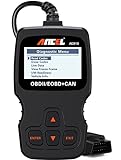
Reputable study materials and a scan tool to actually master this — honest picks, not filler.
Affiliate links — we earn a commission at no extra cost to you.
Want to look up a specific code? Browse all OBD-II codes · Read the repair guides · More quizzes
Educational use only. Always follow your vehicle's service information and safety precautions when diagnosing or repairing.