Brakes & ABS (ASE A5)
Intermediate · 41 questions
Verified ASE A5-style practice questions covering brake hydraulics, drum and disc brakes, power-assist units, wheel bearings and parking brakes, and electronic brake controls (ABS, traction control, and stability control) — each with a plain-English explanation that teaches the why.
-
1. A customer says the brake pedal feels soft and spongy and sinks slowly toward the floor on a firm hold, but the fluid level is normal and there are no visible leaks. What is the most likely cause?
- A. Air trapped in the hydraulic system ✓
- B. Rotors machined below minimum thickness
- C. A clogged cabin air filter
- D. Worn brake pads down to the wear indicator
Answer: A — Air trapped in the hydraulic system. A spongy pedal almost always means there is air in the lines. Brake fluid is nearly incompressible, but air compresses, so the pedal feels mushy and travels too far. Bleeding the system to purge the air restores a firm pedal. (A pedal that slowly sinks under steady pressure with no external leak can also point to a failing master cylinder bypassing internally, but air is the classic spongy-pedal cause and the first thing to rule out.) Worn pads or thin rotors change pad feel and pulsation, not pedal sponginess.
-
2. Pulsation felt through the brake pedal during braking is most commonly caused by:
- A. Air in the master cylinder reservoir
- B. Disc thickness variation (uneven rotor thickness), often loosely called a 'warped rotor' ✓
- C. A weak brake light switch
- D. Low tire pressure on one axle
Answer: B — Disc thickness variation (uneven rotor thickness), often loosely called a 'warped rotor'. What people call a 'warped rotor' is usually disc thickness variation: the rotor has thick and thin spots, so as it spins the caliper pistons get pushed in and out, and you feel that pulse in the pedal. True heat-warping (bending out of flat) happens, but uneven thickness is the far more common cause. You confirm it by measuring thickness at several points around the rotor with a micrometer and checking runout with a dial indicator. The fix is resurfacing within spec or replacing the rotor.
-
3. Before reinstalling brake pads, you measure a front rotor and it is at or below the 'minimum thickness' (discard thickness) stamped on the rotor. What is the correct action?
- A. Machine it 0.5 mm thinner to clean up the surface
- B. Reinstall it as-is since the pads are new
- C. Replace the rotor; it cannot be safely machined or returned to service ✓
- D. Sand the surface with emery cloth and reuse it
Answer: C — Replace the rotor; it cannot be safely machined or returned to service. The minimum (discard) thickness is the safety limit. A rotor at or below it must be replaced, never machined further. Too-thin rotors can't absorb and shed heat properly, leading to brake fade, cracking, and even failure. The separate 'machine-to' spec is always above the discard limit, so a rotor already at minimum has no material left to cut. New pads on a worn-out rotor is a comeback waiting to happen.
-
4. DOT 3, DOT 4, and DOT 5.1 brake fluids are glycol-based and hygroscopic. What does 'hygroscopic' mean for service?
- A. The fluid repels water, so moisture never enters the system
- B. The fluid is silicone-based and must never be mixed with DOT 5
- C. The fluid thickens in cold weather and must be warmed before bleeding
- D. The fluid absorbs moisture from the air over time, which lowers its boiling point ✓
Answer: D — The fluid absorbs moisture from the air over time, which lowers its boiling point. Hygroscopic means glycol brake fluid pulls in water from humidity, including through rubber hoses, seals, and every reservoir opening. Absorbed moisture lowers the fluid's boiling point. Under hard braking the fluid can boil, the vapor compresses, and you get a fading, sinking pedal exactly when you need the brakes most. That's why fluid is replaced on a schedule (commonly every 2-3 years) and why you keep containers sealed. DOT 5 is the silicone, non-hygroscopic outlier.
-
5. Which statement about DOT 5 brake fluid is correct?
- A. DOT 5 is silicone-based and must NOT be mixed with glycol-based DOT 3/4/5.1 fluid ✓
- B. DOT 5 is just a higher-boiling version of DOT 4 and mixes freely with it
- C. DOT 5 absorbs water faster than DOT 3, so it needs changing more often
- D. DOT 5.1 and DOT 5 are the same fluid sold under two names
Answer: A — DOT 5 is silicone-based and must NOT be mixed with glycol-based DOT 3/4/5.1 fluid. DOT 5 is silicone-based, while DOT 3, DOT 4, and DOT 5.1 are all glycol-based. They are chemically incompatible: mixing silicone DOT 5 with glycol fluid can cause gelling, poor lubrication of seals, and a spongy pedal. Don't be fooled by the number 'DOT 5.1' — despite the similar name, 5.1 is glycol and compatible with DOT 3/4, whereas DOT 5 is the silicone oddball. If a system is filled with one chemistry, don't add the other.
-
6. How does an anti-lock braking system (ABS) actually prevent wheel lockup during a hard stop?
- A. It applies steady extra hydraulic pressure to all four wheels at once
- B. The module reads wheel speed sensors and commands the hydraulic modulator to rapidly pulse (release and reapply) pressure at any wheel about to lock ✓
- C. It cuts engine power until the wheels stop slipping
- D. It locks the rear wheels first to shorten the stop
Answer: B — The module reads wheel speed sensors and commands the hydraulic modulator to rapidly pulse (release and reapply) pressure at any wheel about to lock. ABS watches each wheel's speed via the wheel speed sensors. When the module sees a wheel decelerating much faster than the others (about to lock), it commands the hydraulic modulator (with its valves and pump) to momentarily release pressure to that wheel, then reapply it, many times per second. This keeps the tire rolling near the edge of grip so the driver retains steering control. It modulates pressure per wheel; it does not just add pressure or cut engine power.
-
7. During a hard emergency stop, the driver feels the brake pedal pulsing and hears a rapid clicking/buzzing from under the car. What does this indicate?
- A. A failed master cylinder that needs immediate replacement
- B. Air in the lines that must be bled before driving
- C. Normal ABS operation — the modulator is cycling to prevent lockup ✓
- D. Warped rotors causing the pulsation
Answer: C — Normal ABS operation — the modulator is cycling to prevent lockup. A pulsing pedal and rapid buzzing during a hard or slippery stop is normal ABS activity — the pump and valves cycling pressure. Drivers who aren't expecting it sometimes lift off, which defeats the system. The correct technique is to keep firm, steady pressure and let ABS do its job while you steer. This is different from rotor-pulsation, which you'd feel during normal (non-ABS) braking; ABS pulsing only happens when the system is actively intervening.
-
8. A vehicle stores C-codes (chassis) for a single wheel speed sensor and the ABS warning light is on. Which check is the best first step?
- A. Replace the ABS control module immediately
- B. Bleed the brakes at all four wheels
- C. Replace the master cylinder
- D. Inspect that sensor and its tone/reluctor ring and wiring, and compare live wheel-speed data across all four wheels ✓
Answer: D — Inspect that sensor and its tone/reluctor ring and wiring, and compare live wheel-speed data across all four wheels. C-codes are chassis codes, and ABS faults live here. When one wheel's sensor is flagged, start at that sensor: look for a damaged or dirty sensor tip, a cracked or rusty tone (reluctor) ring, a chewed connector, or wiring rubbed through near the knuckle. Then watch live wheel-speed PIDs while rotating or driving — a sensor reading zero or erratic while the others track smoothly confirms the fault. Jumping straight to module or master-cylinder replacement skips the cheap, common causes.
-
9. A magnetic (passive) wheel speed sensor generates its signal by:
- A. A toothed tone/reluctor ring passing the sensor tip, inducing an AC voltage that rises with wheel speed ✓
- B. Measuring brake fluid pressure at the caliper
- C. Counting brake pedal presses electronically
- D. Reading tire tread depth optically
Answer: A — A toothed tone/reluctor ring passing the sensor tip, inducing an AC voltage that rises with wheel speed. A passive (variable-reluctance) wheel speed sensor is essentially a coil and magnet. As the teeth of the tone/reluctor ring sweep past the sensor tip, they vary the magnetic field and induce an alternating voltage whose frequency and amplitude climb with wheel speed. That's why a rusted, cracked, or debris-packed tone ring, or an air gap that's too wide, produces a weak or erratic signal and sets a wheel-speed code. (Newer active sensors instead use a powered Hall-effect or magnetoresistive element reading a magnetic encoder ring, and unlike passive sensors they can read speed all the way down to a stop.)
-
10. What is the correct general sequence and method for manually (two-person) bleeding a conventional brake system?
- A. Open all four bleeders at once and let gravity push the air out in minutes
- B. Keep the reservoir topped up; pump and hold pressure, crack the bleeder to expel fluid/air, close it before releasing the pedal — working the wheels in the order specified by the manufacturer ✓
- C. Release the bleeder while the helper releases the pedal, so air gets sucked back out
- D. Bleed only the wheel nearest the master cylinder and stop
Answer: B — Keep the reservoir topped up; pump and hold pressure, crack the bleeder to expel fluid/air, close it before releasing the pedal — working the wheels in the order specified by the manufacturer. The classic two-person method: helper pumps and holds firm pressure, you crack the bleeder to push out fluid and air, then you close the bleeder BEFORE the helper lifts off the pedal. Closing first prevents air and dirty fluid from being drawn back in. Keep the reservoir full so you never uncover the port and introduce new air. Follow the manufacturer's bleed sequence (often, but not always, farthest wheel first). Many vehicles with ABS also need a scan-tool-commanded modulator bleed to clear air trapped in the valves.
-
11. After replacing a caliper and bleeding the brakes, the customer returns saying the brakes drag and the wheel gets very hot on one corner. Of these, which is a likely cause?
- A. Brake fluid that is too fresh
- B. An ABS sensor reading slightly high
- C. A seized caliper slide pin or a piston/seal not retracting, or a collapsed flex hose acting as a one-way restriction ✓
- D. Rotors that are brand new and at full thickness
Answer: C — A seized caliper slide pin or a piston/seal not retracting, or a collapsed flex hose acting as a one-way restriction. A single dragging, overheating wheel points to something keeping that brake applied: sticky or seized caliper slide pins, a piston that won't retract, or a deteriorated flex hose that has collapsed internally and traps pressure so the caliper can't fully release. The drag builds heat, can boil fluid, and accelerates pad and rotor wear. Fresh fluid, full-thickness rotors, and a slightly high sensor reading don't cause one corner to drag. Diagnose by checking for free pin movement, residual pressure, and whether cracking the bleeder lets the wheel spin free (which implicates a trapped-pressure hose).
-
12. The brake warning light (not the ABS light) is on and the pedal can be pushed unusually low, with fluid found leaking near one rear wheel. What is the safe interpretation?
- A. It's only the ABS, so the vehicle brakes normally and can be driven indefinitely
- B. The low fluid is from normal pad wear and needs no repair
- C. The parking brake cable is simply out of adjustment
- D. There is a hydraulic leak; the vehicle should not be driven until the leak is repaired and the system is bled, because braking is compromised ✓
Answer: D — There is a hydraulic leak; the vehicle should not be driven until the leak is repaired and the system is bled, because braking is compromised. A red brake warning light plus a low pedal and visible fluid loss means a hydraulic leak — likely a wheel cylinder, caliper, or line. That's a safety emergency: a leaking circuit can lose braking force, and the low pedal proves you're already losing hydraulic integrity. The car should not be driven until it's fixed and properly bled. Note the distinction: the red BRAKE light flags low fluid/pressure or parking brake, while the amber ABS light flags the anti-lock system. Fluid that drops slowly with pad wear is normal; a puddle and a sinking pedal is not.
-
13. With the engine running, the brake pedal feels firm at first but then slowly sinks toward the floor under steady foot pressure. There is no external leak and the fluid level is stable. What is the most likely cause?
- A. A master cylinder bypassing internally past worn seals ✓
- B. Air trapped in the lines
- C. A warped front rotor
- D. A seized caliper slide pin
Answer: A — A master cylinder bypassing internally past worn seals. A pedal that holds firm momentarily then slowly sinks under constant pressure, with NO external leak and a stable fluid level, points to the master cylinder leaking internally — fluid bypasses the worn piston seals back into the reservoir instead of holding pressure. Air in the lines feels spongy from the start and usually bleeds out; a warped rotor causes pulsation, not a sinking pedal; a slide pin causes drag/uneven wear. The 'sinks under steady pressure, no visible leak' pattern is the classic internal-bypass master cylinder.
-
14. A technician accidentally adds engine oil to the brake master cylinder reservoir. What is the correct response?
- A. Top it off with the correct fluid and drive normally
- B. Flush the entire system and replace the rubber seals/cups the petroleum contacted — petroleum swells and destroys the rubber ✓
- C. Drain only the reservoir and refill
- D. Add more brake fluid to dilute it
Answer: B — Flush the entire system and replace the rubber seals/cups the petroleum contacted — petroleum swells and destroys the rubber. Glycol brake systems use rubber (EPDM-type) seals that swell and disintegrate when exposed to petroleum products (engine oil, power-steering fluid, etc.). Contamination requires flushing the whole system and replacing the rubber components it reached — master cylinder cups, caliper/wheel-cylinder seals, and often hoses. You cannot simply top off, dilute, or drain the reservoir; the contaminant has already started attacking the seals. This is a serious, safety-critical mistake to correct fully.
-
15. What is the purpose of a proportioning valve in a brake hydraulic system?
- A. To increase pressure to the rear brakes for faster stops
- B. To hold residual pressure in the front calipers
- C. To reduce hydraulic pressure to the rear brakes during hard stops to help prevent rear-wheel lockup ✓
- D. To bleed air automatically from the system
Answer: C — To reduce hydraulic pressure to the rear brakes during hard stops to help prevent rear-wheel lockup. During hard braking, weight transfers forward and the rear wheels carry less load, so they lock up easily. The proportioning valve limits/reduces pressure to the rear brakes above a certain point, balancing braking and preventing premature rear lockup. (Many modern vehicles do this electronically via the ABS module instead — electronic brake-force distribution.) It does not boost rear pressure, hold front residual pressure, or bleed air.
-
16. After repeated hard stops down a long grade, a driver reports the brake pedal going soft/long with reduced braking. The most likely cause is:
- A. A suddenly warped rotor
- B. A failed ABS module
- C. Low tire pressure
- D. Brake fluid overheating and boiling — moisture-laden fluid creates compressible vapor (fluid fade) ✓
Answer: D — Brake fluid overheating and boiling — moisture-laden fluid creates compressible vapor (fluid fade). Repeated hard braking builds heat that can boil the brake fluid, especially if it has absorbed moisture over time (lower boiling point). The vapor is compressible, so the pedal goes soft/long and braking fades — this is fluid fade, and it's why fresh, high-boiling-point fluid matters. (Overheated, glazed linings cause a different 'mechanical' fade with a firm pedal but low friction.) A rotor doesn't warp instantly from one descent, and the ABS module/tire pressure wouldn't produce this symptom.
-
17. On most drum brakes with automatic self-adjusters, when do the adjusters typically operate?
- A. When the brakes are applied while the vehicle is moving in reverse ✓
- B. Only during highway driving
- C. Continuously while parked
- D. Only when the parking brake is released
Answer: A — When the brakes are applied while the vehicle is moving in reverse. Most drum-brake self-adjuster designs take up lining-wear slack when the brakes are applied while backing up — the shoe movement and the adjuster lever ratchet the star wheel a notch. That's why a common shop tip is to make several reverse stops to let drum brakes self-adjust. They don't adjust on the highway only, while parked, or tied to releasing the parking brake.
-
18. A drum brake grabs hard or pulls to one side. Which is a common cause?
- A. Brake fluid that is too fresh
- B. Grease, brake fluid, or axle-seal leakage contaminating the brake lining ✓
- C. An overinflated spare tire
- D. A new wheel speed sensor
Answer: B — Grease, brake fluid, or axle-seal leakage contaminating the brake lining. Oil, grease, or brake fluid (often from a leaking wheel cylinder or axle seal) soaking into a brake shoe's friction material makes it grab erratically and pull. The fix is to find and correct the leak and replace the contaminated shoes — you can't clean contamination out of the lining. Fresh fluid, tire pressure, and a wheel speed sensor wouldn't cause a drum brake to grab/pull.
-
19. In a typical duo-servo drum brake, how do the primary and secondary shoes differ?
- A. Both shoes are identical and interchangeable
- B. The primary shoe handles all the braking
- C. The secondary shoe usually has more lining and does the majority of the braking via servo action ✓
- D. The secondary shoe is only for the parking brake
Answer: C — The secondary shoe usually has more lining and does the majority of the braking via servo action. In a duo-servo design the primary (forward) shoe, when applied, wedges against and applies the secondary (rearward) shoe — a self-energizing 'servo' action. The secondary shoe therefore does most of the braking work and is built with more friction material/longer lining. Installing the shoes in the wrong positions (lining lengths swapped) hurts performance. They are not identical, and the secondary shoe isn't just for the parking brake.
-
20. A brake drum is measured and found to exceed its maximum (discard) diameter stamped on the drum. What is the correct action?
- A. Machine it further to clean it up
- B. Reinstall it as-is and adjust the shoes
- C. Install oversized shoes to compensate
- D. Replace the drum — it must not be machined or used beyond the discard diameter ✓
Answer: D — Replace the drum — it must not be machined or used beyond the discard diameter. Drums have a maximum/discard diameter cast or stamped into them. Beyond that limit the drum is too thin to dissipate heat safely and can crack or distort, so it must be replaced — never machined past or run beyond the discard spec. You can't compensate with oversized shoes. The same principle applies to rotors with their minimum-thickness spec.
-
21. Fluid is found on the inside of a drum brake assembly and the pedal is low. What is the most likely source and the required repair?
- A. A leaking wheel cylinder — replace it and reline the contaminated shoes ✓
- B. A leaking radiator — top off coolant
- C. A loose lug nut — retorque it
- D. A worn serpentine belt — replace it
Answer: A — A leaking wheel cylinder — replace it and reline the contaminated shoes. Brake fluid inside the drum, behind the backing plate, and on the shoes typically means a leaking wheel cylinder. That loses hydraulic pressure (low/soft pedal) and contaminates the linings, so the repair is to replace the wheel cylinder and reline the brakes (contaminated shoes can't be cleaned). Coolant, lug nuts, and belts have nothing to do with brake fluid inside a drum.
-
22. On a floating-caliper disc brake, the INNER pad is worn much more than the outer pad. What does this most likely indicate?
- A. Seized caliper slide pins/bushings
- B. A seized or sticking caliper piston ✓
- C. A warped rotor
- D. Low brake fluid only
Answer: B — A seized or sticking caliper piston. On a floating caliper, the piston pushes the inner pad directly while the caliper slides to pull the outer pad in. If the INNER pad wears far more, the piston is applying but not releasing properly (sticking piston/bore). If the OUTER pad wears more, the caliper isn't sliding — seized slide pins/bushings. Reading which pad wore tells you where the bind is. A warped rotor causes pulsation/even wear; low fluid alone doesn't cause uneven pad wear.
-
23. To check a rotor for the thickness variation that causes brake pedal pulsation, you should:
- A. Measure the rotor diameter with a tape measure
- B. Check the rotor color by eye
- C. Measure thickness with a micrometer at several points around the rotor and compare the readings ✓
- D. Weigh the rotor
Answer: C — Measure thickness with a micrometer at several points around the rotor and compare the readings. Thickness variation (parallelism) — high and low spots around the rotor — causes the pedal pulsation many people call 'warping.' You measure it with a micrometer at multiple points (typically several spots around the rotor at the same radius) and compare; variation beyond the spec (often around 0.0005-0.001 in) causes pulsation. Lateral runout is checked separately with a dial indicator. Diameter, color, and weight don't reveal thickness variation.
-
24. Compared with semi-metallic brake pads, ceramic pads generally:
- A. Always outperform every pad type under extreme racing heat
- B. Are made entirely of copper
- C. Require no bedding-in ever
- D. Run quieter, produce less visible dust, and are gentler on rotors, with good everyday performance ✓
Answer: D — Run quieter, produce less visible dust, and are gentler on rotors, with good everyday performance. Ceramic pads are popular for daily driving because they're quieter, make less (and lighter-colored) dust, and tend to be easier on rotors, with stable everyday performance. Semi-metallic pads typically handle high-heat/heavy-duty and performance use better but are noisier, dustier, and harder on rotors. Ceramics are not pure copper, aren't automatically best at extreme racing temperatures, and still benefit from proper bedding. Each is a trade-off — match the pad to how the vehicle is used.
-
25. Why is the break-in (bedding) procedure important after installing new disc pads and rotors?
- A. It transfers an even layer of friction material onto the rotor and prevents uneven deposits, glazing, and judder ✓
- B. It charges the battery
- C. It aligns the steering
- D. It calibrates the fuel injectors
Answer: A — It transfers an even layer of friction material onto the rotor and prevents uneven deposits, glazing, and judder. Bedding-in is a series of controlled stops that gradually heat the brakes and lay down an even transfer layer of pad material on the rotor surface. Done right, it gives smooth, quiet braking and avoids uneven deposits and glazing that cause pedal pulsation/judder. Skipping it or overheating new brakes early can permanently glaze the pads. It has nothing to do with the battery, alignment, or injectors.
-
26. A vehicle has a high-pitched brake squeal but braking performance is normal. Which is a typical cause and fix?
- A. A failing alternator — replace it
- B. High-frequency vibration of the pads — address with anti-rattle clips/shims, lubricating contact points, and proper pad hardware ✓
- C. Low coolant — top it off
- D. A clogged cabin air filter — replace it
Answer: B — High-frequency vibration of the pads — address with anti-rattle clips/shims, lubricating contact points, and proper pad hardware. Brake squeal is usually a high-frequency vibration between the pad, caliper, and rotor. It's controlled with anti-rattle/abutment clips, shims, lubricating the pad-to-caliper contact points (not the friction surface), chamfered pads, and correct hardware; glazed pads/rotors can also squeal. It's a noise issue, not a safety failure when braking is otherwise normal. The alternator, coolant, and cabin filter are unrelated.
-
27. How do you perform a basic functional test of a vacuum brake booster?
- A. Rev the engine to 4,000 RPM and watch the pedal
- B. Disconnect the battery and press the pedal
- C. With the engine off, pump the pedal to deplete reserve vacuum, hold firm pressure, then start the engine — the pedal should sink slightly as assist returns ✓
- D. Spray water on the booster
Answer: C — With the engine off, pump the pedal to deplete reserve vacuum, hold firm pressure, then start the engine — the pedal should sink slightly as assist returns. The standard test: engine off, pump the brake pedal several times to use up stored vacuum (the pedal becomes hard/high). Hold steady pressure and start the engine; a working booster suddenly provides vacuum assist and the pedal noticeably sinks a bit under your foot. No drop means a booster or vacuum-supply problem (diaphragm, check valve, hose, or vacuum source). Revving high, disconnecting the battery, or spraying water are not valid booster tests.
-
28. A driver reports the brake pedal is very hard and requires much more effort than normal, though the brakes still work. What should you suspect first?
- A. Air in the hydraulic lines
- B. A warped rotor
- C. An overfilled master cylinder
- D. Loss of power-brake assist — a leaking booster diaphragm, failed check valve, collapsed vacuum hose, or weak vacuum source ✓
Answer: D — Loss of power-brake assist — a leaking booster diaphragm, failed check valve, collapsed vacuum hose, or weak vacuum source. A hard, high-effort pedal that still stops the car points to loss of power assist, not a hydraulic fault. On a vacuum system, suspect a torn booster diaphragm, a bad one-way check valve, a collapsed/leaking vacuum hose, or a weak vacuum source (engine or vacuum pump). Air in the lines makes the pedal SOFT, not hard; a warped rotor causes pulsation; an overfilled master cylinder doesn't harden the pedal. Verify with the booster functional test.
-
29. Some diesel and heavy-duty vehicles use a hydroboost power-brake system instead of a vacuum booster. How does hydroboost provide assist?
- A. It uses hydraulic pressure from the power-steering pump ✓
- B. It uses compressed air from the A/C system
- C. It uses electrical current from the alternator directly
- D. It uses engine coolant pressure
Answer: A — It uses hydraulic pressure from the power-steering pump. Hydroboost uses high-pressure hydraulic fluid from the power-steering pump to provide braking assist, which is ideal for diesels and turbocharged engines that don't generate strong intake vacuum. A loss of power-steering assist or fluid often shows up as a hard brake pedal too. It does not run on A/C air, direct alternator current, or coolant pressure. (Newer vehicles increasingly use electro-hydraulic or electric boosters.)
-
30. A growling/rumbling noise rises with vehicle speed and changes in volume when the driver turns left or right. What is the most likely cause?
- A. A failing fuel pump
- B. A worn wheel bearing ✓
- C. A loose exhaust heat shield
- D. A weak ignition coil
Answer: B — A worn wheel bearing. A wheel-bearing growl/rumble tracks vehicle speed and typically changes when cornering, because turning shifts the vehicle's weight onto or off of the bad bearing (load increases on the opposite-side bearing in a turn). That load-dependent change in the noise is the giveaway. A fuel pump whine relates to engine demand, a heat shield rattles, and a coil causes a misfire — none track road speed and cornering load like a bad bearing.
-
31. On a vehicle with a sealed (non-serviceable) hub bearing assembly that also houses the wheel speed sensor, a bearing found to be rough or loose should be:
- A. Repacked with grease and reinstalled
- B. Adjusted with a castle nut to remove play
- C. Replaced as a complete hub/bearing assembly ✓
- D. Left alone if the ABS light is off
Answer: C — Replaced as a complete hub/bearing assembly. Sealed hub-bearing units are not serviceable — you can't repack or adjust them — so a rough or loose one is replaced as a complete assembly (which often includes the integrated wheel speed sensor). Older serviceable tapered-roller bearings are the ones you clean, repack, and adjust with a spindle nut. Ignoring a bad bearing because the ABS light is off is unsafe: play can affect the WSS air gap and the wheel itself.
-
32. The amber ABS warning lamp is on but the red BRAKE warning lamp is OFF. What does this tell you about the vehicle's braking?
- A. The vehicle has no brakes at all and must be towed
- B. The parking brake is stuck on
- C. The engine will not start
- D. The anti-lock function is disabled, but the normal (base) hydraulic brakes still work ✓
Answer: D — The anti-lock function is disabled, but the normal (base) hydraulic brakes still work. An ABS-only warning means the anti-lock system has faulted and is disabled — you simply lose anti-lock (and usually traction/stability) function, while the conventional hydraulic brakes still stop the car normally. The RED brake lamp is the serious one: low fluid, a hydraulic pressure-differential (split-system) failure, or parking brake applied. So amber ABS = drive with care and fix it; red = stop and address immediately.
-
33. What does the parking (emergency) brake do on most vehicles, and how is it actuated?
- A. It mechanically applies the rear brakes via a cable or electric actuator, independent of the hydraulic system ✓
- B. It locks the transmission output shaft hydraulically
- C. It applies only the front brakes electrically
- D. It works only while the engine is running
Answer: A — It mechanically applies the rear brakes via a cable or electric actuator, independent of the hydraulic system. The parking brake mechanically applies the rear brakes — through a cable to the rear shoes/calipers (or a drum-in-hat), or via an electric actuator on electronic parking brakes — independent of the hydraulic service brakes, so it can hold the car even if hydraulics fail. It needs periodic cable/shoe adjustment (or a relearn on electric systems). It doesn't grab the transmission, use the front brakes, or require the engine to be running.
-
34. A single front wheel gets very hot, drags, and the brake doesn't release, even though the caliper and slide pins are new. What component should you suspect?
- A. A faulty oxygen sensor
- B. A deteriorated brake hose whose inner liner has collapsed and is acting as a one-way valve ✓
- C. A blown headlight fuse
- D. A worn motor mount
Answer: B — A deteriorated brake hose whose inner liner has collapsed and is acting as a one-way valve. When the inner lining of a rubber brake hose delaminates, it can act like a check valve — fluid flows to the caliper when you press the pedal but can't return when you release, so that wheel stays applied, drags, and overheats. With a known-good caliper and slide pins, the collapsed hose is the classic culprit; you confirm by cracking the bleeder at the hot caliper and seeing trapped pressure release. Oxygen sensors, fuses, and motor mounts are unrelated to a dragging brake.
-
35. What is the primary purpose of an anti-lock braking system (ABS)?
- A. To always guarantee a shorter stopping distance on every surface
- B. To replace the need for brake pads
- C. To prevent the wheels from locking up so the driver can maintain steering control during hard braking ✓
- D. To increase top speed
Answer: C — To prevent the wheels from locking up so the driver can maintain steering control during hard braking. ABS rapidly modulates brake pressure at wheels about to lock, keeping them rolling so the driver retains steering and directional control during hard or slippery stops. It does NOT guarantee a shorter stop on every surface — on loose gravel or deep snow, stopping distance can actually be longer (though steering is preserved). It doesn't replace pads or affect top speed. Control, not necessarily distance, is the goal.
-
36. An ABS tone ring (reluctor) has damaged or missing teeth. What symptom is most likely?
- A. Higher fuel economy
- B. A no-crank condition
- C. Brighter headlights
- D. An erratic wheel-speed signal causing a false ABS activation, often felt at low speed near a stop, and/or a C-code ✓
Answer: D — An erratic wheel-speed signal causing a false ABS activation, often felt at low speed near a stop, and/or a C-code. The wheel speed sensor reads the passing teeth of the tone/reluctor ring. Damaged, missing, or debris-packed teeth produce an irregular signal, which the ABS module can misread as a wheel locking — causing unwanted (false) ABS activation, classically as the vehicle slows to a near stop, and frequently a wheel-speed C-code. Inspect the ring along with the sensor and its air gap. It has nothing to do with fuel economy, cranking, or lighting.
-
37. What does a traction control system (TCS) do, and what hardware does it share?
- A. It limits drive-wheel spin by applying that wheel's brake and/or reducing engine power, using the ABS wheel-speed sensors and hydraulics ✓
- B. It steers the vehicle automatically
- C. It controls cabin temperature
- D. It charges the battery faster
Answer: A — It limits drive-wheel spin by applying that wheel's brake and/or reducing engine power, using the ABS wheel-speed sensors and hydraulics. Traction control detects a drive wheel spinning faster than the others (via the same wheel speed sensors ABS uses) and reins it in by pulsing that wheel's brake and/or cutting engine torque, restoring grip on slippery surfaces. Because it shares the ABS wheel-speed sensors and hydraulic modulator, a wheel-speed sensor fault often disables ABS and TCS together. It doesn't steer, manage climate, or charge the battery.
-
38. Electronic stability control (ESC) goes beyond ABS and TCS by using which additional inputs?
- A. Only the fuel-level sensor
- B. Steering-angle, yaw-rate, and lateral-acceleration sensors to brake individual wheels and counter under/oversteer ✓
- C. The cabin temperature sensor
- D. The windshield rain sensor
Answer: B — Steering-angle, yaw-rate, and lateral-acceleration sensors to brake individual wheels and counter under/oversteer. ESC compares where the driver is steering (steering-angle sensor) with how the car is actually rotating and sliding (yaw-rate and lateral-acceleration sensors). If it detects understeer or oversteer, it brakes individual wheels (and may cut throttle) to bring the car back on the intended path. It builds on the ABS/TCS hardware plus these motion sensors. The fuel-level, cabin-temp, and rain sensors play no role in stability control.
-
39. At key-on or the first few feet of driving, a vehicle's ABS makes a brief buzzing/clunking sound and the brake pedal may move slightly. What does this indicate?
- A. An immediate ABS failure requiring towing
- B. A failing transmission
- C. A normal ABS self-test cycling the pump and solenoids ✓
- D. A vacuum leak
Answer: C — A normal ABS self-test cycling the pump and solenoids. Many ABS systems run a self-test at startup or at low speed on the first drive-off, briefly cycling the hydraulic pump and solenoid valves. The buzz/clunk and slight pedal movement are normal and confirm the system is checking itself. It is not a failure (a real fault lights the ABS lamp and stores a code). It has nothing to do with the transmission or a vacuum leak.
-
40. After opening the hydraulic system on a vehicle with ABS, the pedal stays low and spongy despite conventional bleeding. What is often required?
- A. Adding more pads
- B. Replacing the rotors
- C. Disconnecting the battery for an hour
- D. Using a scan tool to cycle the ABS hydraulic unit (pump/solenoids) to purge air trapped in the modulator, per the service procedure ✓
Answer: D — Using a scan tool to cycle the ABS hydraulic unit (pump/solenoids) to purge air trapped in the modulator, per the service procedure. Air can get trapped inside the ABS hydraulic control unit (HCU), where normal manual/pressure bleeding can't move it. Many vehicles require a scan tool to command the ABS pump and solenoids through an automated bleed sequence to flush that trapped air, following the OEM procedure. Adding pads, replacing rotors, or disconnecting the battery won't remove air from the modulator. Always check the service information for the specific ABS bleed steps.
-
41. After a wheel alignment or steering/suspension repair on an ESC-equipped vehicle, which calibration is commonly required?
- A. A steering-angle sensor (SAS) calibration/relearn ✓
- B. A fuel-injector flow test
- C. A spark-plug gap reset
- D. A tire-pressure-sensor rotation
Answer: A — A steering-angle sensor (SAS) calibration/relearn. ESC relies on the steering-angle sensor knowing true straight-ahead. After an alignment, SAS replacement, or steering/suspension work, the sensor often must be calibrated/relearned (usually with a scan tool, sometimes a steering-wheel sweep procedure) so stability control reads steering input correctly. Skipping it can leave an ESC/SAS code or impair the system. It has nothing to do with injectors, spark-plug gap, or tire-pressure sensors.
Sources (questions verified 2026-06-18)
Documents this page was checked against. How we verify.
- ASE Automobile Study Guide, 2026 editionBrakes (Test A5) Test Specifications and Task List, from p. 28. Content areas and their official question counts: A Hydraulic/Power Assist/Parking 19, B Drum 5, C Disc 11, D ABS/TCS/ESC 10. Our questions are mapped to these areas; the mapping is our own editorial judgement, the areas and counts are ASE's.
- FMVSS No. 116 (49 CFR 571.116)Motor vehicle brake fluids; the DOT 3 / 4 / 5 / 5.1 distinctions in the fluid questions are defined here
- Verification recordevery question independently audited 2026-06-17, re-run on the 2026-06-18 expansion to 41 questions: marked answer checked as the single best choice, distractors checked as genuinely wrong, every numeric claim in the explanation web-confirmed (DOT 5.1 glycol vs DOT 5 silicone, active vs passive wheel-speed sensors). Verdict for this bank: 0 wrong, 0 weak.
Want to go deeper?
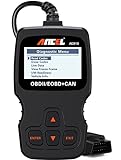
Reputable study materials and a scan tool to actually master this — honest picks, not filler.
Affiliate links — we earn a commission at no extra cost to you.
Want to look up a specific code? Browse all OBD-II codes · Read the repair guides · More quizzes
Educational use only. Always follow your vehicle's service information and safety precautions when diagnosing or repairing.