ASE A8: Engine Performance
Intermediate · 59 questions
Fifty-nine verified ASE-style practice questions across the official A8 content areas — general powertrain diagnosis, computerized/OBD-II controls, ignition, fuel/air induction & exhaust, and emissions — each with a plain-English explanation that teaches the why.
-
1. A scan tool shows Long Term Fuel Trim (LTFT) at +22% at idle but only +4% at cruise. The Short Term trim swings normally. What does this pattern most likely indicate?
- A. A vacuum (unmetered air) leak downstream of the MAF sensor ✓
- B. A clogged catalytic converter restricting exhaust flow
- C. A rich-running fuel injector that is stuck open
- D. A faulty downstream (post-cat) oxygen sensor
Answer: A — A vacuum (unmetered air) leak downstream of the MAF sensor. A vacuum leak adds a roughly fixed amount of unmetered air. At idle the engine pulls little air, so that leak is a big percentage of total flow and the ECM adds lots of fuel (high positive trim). At cruise the engine moves far more air, so the same leak is a tiny percentage and the trim returns to normal. Positive trim that is worst at idle and improves with load is the classic vacuum-leak fingerprint. Positive trim means the ECM is ADDING fuel to correct a lean condition.
-
2. On a coil-on-plug V6, a P0303 (cylinder 3 misfire) is stored. To quickly determine whether the cause is the coil, the plug, or something else, what is the most efficient first diagnostic step?
- A. Replace the cylinder 3 coil and plug as a set and clear the code
- B. Swap the cylinder 3 coil with a known-good coil from another cylinder and see if the misfire follows ✓
- C. Perform a cylinder leak-down test on cylinder 3 immediately
- D. Replace all six coils since one has already failed
Answer: B — Swap the cylinder 3 coil with a known-good coil from another cylinder and see if the misfire follows. Swapping the suspect coil to a different cylinder is the fastest, cheapest way to isolate the fault. If the misfire moves with the coil (e.g., P0303 becomes P0305), the coil is bad. If the misfire stays on cylinder 3, the coil is good and the problem is the plug, injector, or a mechanical issue. This test costs nothing in parts and tells you exactly where to look before you spend money. Parts-swapping the whole set is wasteful and never confirms the actual cause.
-
3. What is the fundamental operating difference between a MAF sensor and a MAP sensor?
- A. A MAF measures intake air temperature; a MAP measures barometric pressure only
- B. A MAF works only at idle; a MAP works only under load
- C. A MAF directly measures the mass of air entering the engine; a MAP measures manifold pressure, and the ECM calculates airflow from it (speed-density) ✓
- D. A MAF is a two-wire sensor; a MAP is always a three-wire sensor measuring the same thing
Answer: C — A MAF directly measures the mass of air entering the engine; a MAP measures manifold pressure, and the ECM calculates airflow from it (speed-density). A Mass Air Flow sensor sits in the intake tract and directly measures the actual mass of air flowing into the engine (usually via a heated element). A Manifold Absolute Pressure sensor reads the pressure (vacuum) in the intake manifold; the ECM combines that with RPM and air temp to CALCULATE airflow, which is the speed-density method. Knowing which strategy a vehicle uses tells you how to diagnose lean/rich codes: on a MAF car you suspect a dirty/failing MAF or unmetered air after it; on a speed-density car you focus on the MAP signal and vacuum integrity.
-
4. An upstream (pre-catalyst) zirconia oxygen sensor in good working order should show what behavior in closed loop?
- A. A steady fixed voltage around 0.45 V that never changes
- B. A slowly rising voltage that maxes out at 5.0 V
- C. A flat 0.0 V at all times once warmed up
- D. Rapid switching between roughly 0.1 V (lean) and 0.9 V (rich) several times per second ✓
Answer: D — Rapid switching between roughly 0.1 V (lean) and 0.9 V (rich) several times per second. A healthy upstream zirconia O2 sensor constantly switches as the ECM cycles the mixture slightly rich then lean to keep the average at stoichiometric (14.7:1). At operating conditions you should see it oscillate from about 0.1 V (lean) to about 0.9 V (rich) and cross several times per second, with quick transitions. A lazy or stuck sensor that hangs at one voltage or switches slowly is a failing sensor. A steady ~0.45 V is what you'd see at the wire with the sensor disconnected (ECM bias voltage), not normal operation. The DOWNSTREAM sensor, by contrast, should be relatively steady if the catalyst is working.
-
5. A wideband air/fuel ratio (AFR) sensor differs from a conventional narrowband O2 sensor primarily because it:
- A. Reports the actual air/fuel ratio across a wide range instead of just switching rich/lean around stoichiometric ✓
- B. Only works when the engine is in open loop
- C. Cannot be used as an upstream sensor
- D. Measures exhaust temperature rather than oxygen content
Answer: A — Reports the actual air/fuel ratio across a wide range instead of just switching rich/lean around stoichiometric. A narrowband sensor essentially only tells the ECM 'richer than 14.7:1' or 'leaner than 14.7:1' by switching voltage near the stoichiometric point. A wideband (AFR or A/F) sensor reports the actual ratio across a broad range (very rich to very lean), which lets the ECM control fueling much more precisely and respond faster. On a scan tool a wideband is often displayed as a lambda value or an equivalence ratio, not a switching 0.1-0.9 V trace. Don't expect wideband data to 'switch' like an old O2 sensor.
-
6. A vehicle has BOTH positive long-term fuel trims and a P0171 (System Too Lean, Bank 1). A smoke test finds no vacuum leaks. The MAF reads lower than expected for the engine's airflow. What is the most likely cause?
- A. A leaking fuel pressure regulator dumping fuel into the manifold
- B. A contaminated or failing MAF sensor under-reporting airflow ✓
- C. A stuck-open EGR valve
- D. Excessively high fuel pressure
Answer: B — A contaminated or failing MAF sensor under-reporting airflow. If the MAF under-reports airflow, the ECM thinks less air is entering than really is, so it injects too little fuel and the engine runs lean. The O2 sensors see the lean condition and the ECM adds fuel via positive trim, setting P0171. A dirty hot-wire MAF (often from over-oiled aftermarket filters) is a textbook cause. With no vacuum leaks found, comparing actual MAF grams-per-second against the engine's expected airflow at a given RPM confirms it. A leaking regulator or high pressure would push the system RICH, not lean.
-
7. During a relative compression / cranking test, one cylinder reads noticeably low. After adding a small amount of oil to that cylinder (wet test), compression rises significantly. This tells you the leak is at the:
- A. Head gasket between two cylinders
- B. Intake or exhaust valve
- C. Piston rings or cylinder walls ✓
- D. Spark plug threads
Answer: C — Piston rings or cylinder walls. Squirting oil temporarily seals the gap between the piston rings and the cylinder wall. If compression jumps up on the wet test, the sealing problem was at the rings/bore (worn rings, scored cylinder). If compression does NOT improve with oil, the leak is somewhere oil can't seal, typically a burnt or bent valve, a valve-seat issue, or a head-gasket breach. This wet/dry comparison is the fast way to separate a bottom-end (rings) problem from a top-end (valve) problem without tearing the engine apart.
-
8. A stuck-OPEN EGR valve at idle most commonly produces which symptom?
- A. A smooth idle with elevated coolant temperature
- B. A high-RPM surge only at wide-open throttle
- C. A no-crank condition
- D. A rough, unstable, or stalling idle because inert exhaust gas dilutes the intake charge ✓
Answer: D — A rough, unstable, or stalling idle because inert exhaust gas dilutes the intake charge. EGR routes inert exhaust gas back into the intake to lower combustion temperatures and cut NOx, but it's only supposed to do this under cruise/light-load conditions, never at idle. If the valve sticks open at idle, that inert gas dilutes the fresh charge the engine needs for a stable idle, causing rough running, surging, or stalling. The give-away: the rough idle clears up as RPM rises because the exhaust dilution becomes a smaller fraction of total flow. A stuck-CLOSED EGR, by contrast, tends to cause spark knock and NOx failures, not a rough idle.
-
9. A customer says the Check Engine light is OFF but the car failed a state emissions test for 'monitors not ready.' What does this most likely mean?
- A. One or more OBD-II readiness monitors have not completed their self-tests, often because the codes/battery were recently cleared ✓
- B. The PCM is permanently damaged and must be replaced
- C. There is a current hard fault that the PCM is hiding
- D. The MIL bulb is burned out
Answer: A — One or more OBD-II readiness monitors have not completed their self-tests, often because the codes/battery were recently cleared. OBD-II runs self-tests (monitors) for systems like the catalyst, EVAP, O2 sensors, and EGR. Each must run and pass before it reports 'ready.' Clearing codes or disconnecting the battery resets all monitors to 'not ready,' and they only re-run after the vehicle completes specific drive-cycle conditions. Most states allow only one or two incomplete monitors. The fix is to drive the appropriate OEM drive cycle so the monitors complete, not to replace anything. Tell customers not to clear codes right before an emissions test.
-
10. The PCV (Positive Crankcase Ventilation) system's main job is to:
- A. Increase fuel pressure during cold starts
- B. Draw blow-by gases out of the crankcase and burn them in the engine instead of venting them to the atmosphere ✓
- C. Cool the engine oil through the intake manifold
- D. Pressurize the crankcase to improve ring seal
Answer: B — Draw blow-by gases out of the crankcase and burn them in the engine instead of venting them to the atmosphere. Combustion pressure leaks past the rings into the crankcase as 'blow-by.' The PCV system uses intake vacuum to pull those vapors out of the crankcase and route them into the intake to be burned, which controls emissions and keeps the crankcase from building pressure (which would push out oil at the seals). A STUCK-OPEN PCV valve acts like a vacuum leak (lean codes, rough idle); a CLOGGED one causes oil leaks, sludge, and sometimes a whistle. It's a cheap part that's easy to overlook when chasing a lean code.
-
11. On a no-start gas engine that cranks normally, you have spark and fuel pressure. Live data shows the crankshaft position sensor signal is present but there is NO camshaft position sensor signal. What is the most likely consequence and area to check?
- A. The engine will start normally; the cam sensor is only for emissions
- B. The fuel pump will run continuously and flood the engine
- C. Without cam sync the PCM may not be able to time sequential injection/spark, often pointing to a cam sensor, its wiring, or a jumped/broken timing belt or chain ✓
- D. The MAF sensor must be replaced before it will start
Answer: C — Without cam sync the PCM may not be able to time sequential injection/spark, often pointing to a cam sensor, its wiring, or a jumped/broken timing belt or chain. The crank sensor tells the PCM engine speed and base position; the cam sensor tells it WHICH stroke a given cylinder is on so it can fire injectors and coils in the correct sequence. Lose cam sync and many engines won't start (or start hard) because the PCM can't establish proper timing. With crank signal present but cam signal missing, check the cam sensor, its connector/wiring, and critically the timing belt or chain. A jumped or stripped timing component changes cam-to-crank correlation and can kill the cam signal entirely. This is also a clue to inspect for a broken belt before condemning the sensor.
-
12. A scan tool shows calculated engine load near 0% and a flatlined MAP/MAF reading while the engine is clearly running and revving. Before condemning the sensor, the best practice is to:
- A. Immediately replace the sensor since a flat reading is always a dead sensor
- B. Clear all codes and assume the reading will correct itself
- C. Replace the PCM because the data is obviously wrong
- D. Verify the sensor's power, ground, and signal wiring (back-probe the connector) to rule out a circuit fault feeding bad data to the PCM ✓
Answer: D — Verify the sensor's power, ground, and signal wiring (back-probe the connector) to rule out a circuit fault feeding bad data to the PCM. A flatlined or implausible PID can come from the sensor itself OR from a wiring/connector fault (open ground, lost reference voltage, chafed signal wire) feeding garbage to the PCM. Good technique is to confirm the basics at the sensor connector first: proper reference voltage (often 5 V), a clean ground, and a signal that responds to physical change, using a back-probe so you don't pierce wires. Only after the circuit checks out do you condemn the sensor. Replacing parts on scan-data alone, or blaming the PCM first, is how techs waste money on the wrong fix. Always verify the data is real before acting on it.
-
13. An engine cranks but won't start. You've confirmed good spark and injector pulse and 50 psi of fuel pressure. A cranking compression test reads near zero on every cylinder. What is the most likely cause?
- A. A broken or jumped timing belt/chain ✓
- B. A clogged fuel filter
- C. A single fouled spark plug
- D. A weak battery
Answer: A — A broken or jumped timing belt/chain. Spark and fuel are present, so the no-start isn't ignition or fuel delivery. Near-zero compression on ALL cylinders at once points to one common cause: the camshaft(s) no longer turning in time with the crankshaft — a broken or jumped timing belt/chain. The valves aren't opening and closing in sync with the pistons, so no cylinder can build compression. A bad plug or fuel filter would never drop every cylinder to zero. Confirm with the timing marks or by watching the cam sensor signal while cranking.
-
14. A P0300 random/multiple-cylinder misfire is stored. The misfire is obvious at idle but smooths out as engine speed and load increase. With no cylinder-specific codes, what is the most likely cause?
- A. One failed ignition coil
- B. A large vacuum (unmetered air) leak ✓
- C. A single clogged fuel injector
- D. A worn timing chain
Answer: B — A large vacuum (unmetered air) leak. A random misfire across multiple cylinders points to something common to all of them, not one coil or injector (those set cylinder-specific codes like P0301). A vacuum leak leans out every cylinder; at idle the leak is a large fraction of total airflow so the lean misfire is pronounced, but as RPM and load rise the leak becomes a small fraction and the misfire clears. Smoke-test the intake. A single coil or injector affects only one cylinder; a worn chain usually sets cam/crank correlation codes.
-
15. A vehicle has a hunting/surging idle that rises and falls on its own. Which is the most likely cause?
- A. A slipping torque converter clutch
- B. A faulty downstream oxygen sensor
- C. Unmetered air from a vacuum leak or a dirty throttle body / idle-air-control passage ✓
- D. Worn brake pads
Answer: C — Unmetered air from a vacuum leak or a dirty throttle body / idle-air-control passage. Idle surge/hunt is the ECM chasing an unstable idle, almost always caused by uncontrolled air: a vacuum leak, a carbon-fouled throttle body or idle-air-control (IAC) passage, or a sticking IAC valve. The PCM keeps correcting, overshoots, and the RPM oscillates. Clean the throttle body/IAC and smoke-test for leaks. A downstream O2 sensor only monitors the catalyst; the torque converter clutch and brakes have nothing to do with idle quality.
-
16. You can feel a steady misfire but no cylinder-specific code has matured yet. What is the quickest scan-tool method to identify which cylinder is misfiring?
- A. Clear all codes and drive until the MIL returns
- B. Replace coils one at a time until it stops
- C. Read the fuel trim numbers
- D. View the per-cylinder misfire counter PIDs in live data ✓
Answer: D — View the per-cylinder misfire counter PIDs in live data. Most PCMs track a misfire count for each cylinder and report them as live-data PIDs. Watching those counters tells you immediately which cylinder (or cylinders) is accumulating misfires, before a P030x code even matures, and directs your testing. Clearing codes and driving wastes time; swapping parts is the parts-cannon approach; fuel trims tell you rich/lean, not which cylinder is missing.
-
17. A high-mileage engine runs but is down on power. A cranking compression test shows all cylinders LOW but fairly EVEN, and a wet test raises all of them somewhat. What does this most likely indicate?
- A. General ring/cylinder wear across the engine ✓
- B. A single burnt exhaust valve
- C. A blown head gasket between two cylinders
- D. A stuck-open thermostat
Answer: A — General ring/cylinder wear across the engine. Even, across-the-board low compression that improves with oil (the wet test) points to worn rings and cylinders throughout a high-mileage engine, not a single-cylinder fault. A burnt valve would drop ONE cylinder and not improve with oil; a head-gasket breach typically drops TWO ADJACENT cylinders. The thermostat has nothing to do with compression. 'Even but low' = uniform wear; 'one low' = a localized fault.
-
18. An engine has a light, rapid tapping noise from the top end that speeds up as RPM increases. Which is the most likely source?
- A. A spun connecting-rod bearing
- B. Valve-train noise — a lash, lifter, or follower issue ✓
- C. A loose flywheel
- D. A failing water-pump bearing
Answer: B — Valve-train noise — a lash, lifter, or follower issue. A light, rapid tap that tracks engine speed and comes from the top of the engine is classic valve-train noise: excessive valve lash, a collapsed or noisy hydraulic lifter, or a worn rocker/follower. Bottom-end bearing noise is a deeper knock that's loudest under load. A water-pump bearing whines or growls from the front accessory area and doesn't tick with valve events. Locate it with a stethoscope at the valve cover.
-
19. An engine has a deep, heavy knock that is loudest under load and at lower RPM. What does this most likely indicate?
- A. A sticking hydraulic lifter
- B. A loose serpentine belt
- C. A worn connecting-rod (bottom-end) bearing ✓
- D. A clogged catalytic converter
Answer: C — A worn connecting-rod (bottom-end) bearing. A deep, heavy knock that intensifies under load is a bottom-end bearing — typically a rod bearing. Load increases the force across the worn bearing clearance, making the knock louder. Valve-train noise is lighter and higher in the engine; a loose belt squeals; a clogged cat causes power loss and heat, not a knock. A rod knock is a teardown-level repair, so confirm carefully (for example, a cylinder power-balance test to find the affected cylinder).
-
20. Watching a vacuum gauge at idle, the needle drops sharply and regularly — a rhythmic dip that repeats. What does this pattern most commonly indicate?
- A. A perfectly healthy engine
- B. An overcharged A/C system
- C. A slipping clutch
- D. A burnt or leaking valve on one cylinder ✓
Answer: D — A burnt or leaking valve on one cylinder. On a vacuum gauge, a steady high reading (about 17-21 inHg at idle near sea level) is healthy. A regular, rhythmic drop that recurs each time one cylinder reaches a given stroke points to a leaking or burnt valve on that cylinder — manifold vacuum dips as that cylinder loses its seal. A general low/steady reading suggests retarded timing or an intake leak; a needle that flutters at speed suggests weak valve springs. The rhythmic, repeating dip is the burnt-valve signature.
-
21. A vehicle sets P0171 and P0174 (lean, both banks). Unlike a typical vacuum leak, the long-term fuel trims are high at idle AND at cruise, and a smoke test finds no leaks. What should you suspect?
- A. A fuel-delivery shortfall — low fuel pressure/volume from a weak pump or restricted filter ✓
- B. A vacuum leak at one intake runner
- C. A single dead ignition coil
- D. A faulty brake-light switch
Answer: A — A fuel-delivery shortfall — low fuel pressure/volume from a weak pump or restricted filter. Lean on BOTH banks under ALL conditions points to something feeding every cylinder: a fuel-delivery problem. A weak pump, restricted filter, or failing regulator can't keep up, so the mixture goes lean across the board and the PCM adds fuel everywhere (high trims at idle and cruise). A vacuum leak is usually worst at idle and improves with load — that's the contrast here. Verify with a fuel pressure AND volume test under load. One coil affects a single cylinder, not bank-wide trims.
-
22. What is the purpose of a cylinder power-balance (cylinder contribution) test?
- A. To measure exhaust backpressure
- B. To identify which cylinder(s) contribute less power, indicating a weak cylinder ✓
- C. To check charging-system output
- D. To calibrate the throttle position sensor
Answer: B — To identify which cylinder(s) contribute less power, indicating a weak cylinder. A power-balance test momentarily disables (or measures the contribution of) each cylinder in turn and watches the RPM/contribution change. A healthy cylinder causes a clear RPM drop when disabled; a weak cylinder causes little change because it wasn't contributing much. It isolates a weak cylinder so you can focus compression, ignition, and fuel testing there. It says nothing about backpressure, charging, or TPS calibration.
-
23. At warm idle, a healthy small V6 typically shows a mass-airflow reading of only a few grams per second. Your scan tool shows 22 g/s at idle with the engine running smoothly. Before condemning anything, what does this most likely suggest?
- A. A completely normal idle reading
- B. A dead battery
- C. An implausibly high MAF reading — suspect a contaminated/faulty MAF or a wiring fault, and verify against expected airflow ✓
- D. A worn timing chain
Answer: C — An implausibly high MAF reading — suspect a contaminated/faulty MAF or a wiring fault, and verify against expected airflow. Airflow at idle is small — a few grams per second for a typical engine — because the throttle is nearly closed. A reading near 22 g/s at idle is implausible and indicates a MAF reading error (contamination, internal fault, or a wiring/connector problem feeding bad data), not real airflow. Knowing the expected ballpark lets you spot bogus data instead of chasing trims. Always sanity-check a PID against what the engine should physically be doing before replacing parts.
-
24. What information does OBD-II 'freeze frame' data provide?
- A. A real-time graph of all sensors going forward
- B. The vehicle's full service history
- C. A list of every code the vehicle has ever set
- D. A snapshot of sensor/operating conditions captured at the moment a fault code set ✓
Answer: D — A snapshot of sensor/operating conditions captured at the moment a fault code set. When a DTC sets, the PCM stores a freeze frame: a one-time snapshot of key parameters (RPM, load, coolant temp, fuel trims, speed, etc.) as they were at that instant. It's invaluable for recreating the conditions — was the fault cold, at high load, at highway speed? It is not a live graph, a service history, or a code list; it's the conditions tied to the specific stored fault.
-
25. After clearing codes, a customer's monitors read 'not ready.' What must happen for them to return to 'ready'?
- A. The vehicle must complete the specific drive-cycle conditions that let each monitor run and pass ✓
- B. The battery must be disconnected overnight
- C. The PCM must be replaced
- D. The fuel tank must be completely emptied
Answer: A — The vehicle must complete the specific drive-cycle conditions that let each monitor run and pass. Each OBD-II monitor (catalyst, EVAP, O2, EGR, etc.) only runs when its enabling conditions are met — specific ranges of temperature, speed, load, and time that make up a drive cycle. Clearing codes or disconnecting the battery resets monitors to 'not ready'; they return to 'ready' only after the vehicle is driven through those conditions. Disconnecting the battery makes it worse, and nothing here calls for replacing the PCM or emptying the tank.
-
26. What does OBD-II Mode 06 (on-board monitoring test results) give a technician?
- A. A way to reprogram the PCM
- B. The actual pass/fail test values and limits behind the readiness monitors ✓
- C. The transmission fluid temperature only
- D. A list of the vehicle's previous owners
Answer: B — The actual pass/fail test values and limits behind the readiness monitors. Mode 06 exposes the raw component-monitor test results — the measured value, the min/max limit, and pass/fail for tests like catalyst efficiency, EVAP, misfire, and O2 response. It lets you see a monitor that's passing but trending toward its limit (a fault about to set) before a code matures. It's diagnostic data, not a programming function, a single PID, or owner history.
-
27. Under which condition does the PCM operate in CLOSED loop?
- A. Immediately at cold start, ignoring the O2 sensors
- B. Only at wide-open throttle
- C. After the oxygen/AFR sensors and engine reach operating temperature, using their feedback to trim fueling ✓
- D. Only when the MIL is illuminated
Answer: C — After the oxygen/AFR sensors and engine reach operating temperature, using their feedback to trim fueling. In open loop (cold start, and sometimes hard acceleration), the PCM ignores O2/AFR feedback and runs a programmed fuel map. Once the sensors warm up and conditions stabilize, it switches to closed loop, using oxygen-sensor feedback to continuously fine-tune the mixture toward stoichiometric. Fuel trims are meaningful only in closed loop. Wide-open throttle often forces open loop (power enrichment), and the MIL state is unrelated to loop status.
-
28. A scan tool shows a 'pending' code but the MIL is not on. What does 'pending' mean?
- A. The code has been permanently cleared
- B. The PCM is corrupt
- C. The code is from another vehicle
- D. A fault was detected on one drive cycle but hasn't met the criteria to mature into a confirmed code and light the MIL ✓
Answer: D — A fault was detected on one drive cycle but hasn't met the criteria to mature into a confirmed code and light the MIL. Many emissions faults must occur on two consecutive drive cycles before the PCM confirms the code and turns on the MIL. After the first detection the code is stored as 'pending.' If the fault doesn't recur on the next qualifying cycle, the pending code clears itself; if it recurs, it matures to confirmed and the MIL lights. Pending codes are an early warning, useful for catching intermittent faults.
-
29. A throttle position sensor reads a steady 5.0 V on the scan tool regardless of pedal position. What does this most likely indicate?
- A. A circuit fault — likely an open ground or the signal shorted to the 5-volt reference — not necessarily a bad sensor ✓
- B. A perfectly functioning sensor
- C. A discharged battery
- D. A clogged fuel filter
Answer: A — A circuit fault — likely an open ground or the signal shorted to the 5-volt reference — not necessarily a bad sensor. A potentiometer-type TPS should sweep smoothly (about 0.5 V closed to 4.5 V open). Pegged at the 5-volt reference means the signal isn't varying — typically an open sensor ground (which pulls the signal toward reference) or the signal wire shorted to the 5 V reference. Back-probe and check ground and reference at the connector before condemning the sensor; the data alone doesn't prove the sensor is bad. Battery and fuel filter are unrelated to this circuit reading.
-
30. A stored U0100 ('Lost Communication with ECM/PCM') points to a problem in what area?
- A. The catalytic converter
- B. The data-network/bus communication between modules (CAN wiring, connectors, or a module) ✓
- C. The brake friction material
- D. The cabin air filter
Answer: B — The data-network/bus communication between modules (CAN wiring, connectors, or a module). U-codes are network/communication DTCs. U0100 means a module lost the expected data messages from the ECM/PCM over the bus (commonly CAN). Causes include damaged bus wiring, corroded connectors, low module power/ground, or a failed module. You diagnose it with wiring/voltage checks and by seeing which modules are missing from the network — not by replacing emissions or brake parts. The 'U' prefix is the tell.
-
31. A scan tool's bidirectional (active) test lets a technician do what?
- A. Permanently rewrite the VIN
- B. Read tire tread depth
- C. Command an actuator — for example cycle a relay, solenoid, or the fuel pump — to verify it responds ✓
- D. Measure brake-rotor thickness
Answer: C — Command an actuator — for example cycle a relay, solenoid, or the fuel pump — to verify it responds. Bidirectional controls let the tool command outputs — turn the fuel pump on, cycle the EVAP purge/vent, fire an injector, move the EGR, command the cooling fan — so you can confirm the actuator and its circuit work without waiting for the PCM to do it on its own. It's a fast way to split a problem between the command side and the mechanical side. It doesn't rewrite the VIN or measure tires/rotors.
-
32. Worn spark plugs with an excessive gap most directly cause which change in the ignition system?
- A. A drop in resting battery voltage
- B. Lower engine coolant temperature
- C. Higher fuel pressure
- D. A rise in required firing (secondary) voltage, which can lead to misfire under load ✓
Answer: D — A rise in required firing (secondary) voltage, which can lead to misfire under load. A wider plug gap needs more voltage to jump the spark. As plugs wear, the required firing voltage climbs; eventually the coil can't deliver enough — especially under load and high cylinder pressure, when demand is highest — and the cylinder misfires. That's why a misfire that appears under acceleration often traces to worn plugs or weak secondary components. Plug wear doesn't change resting battery voltage, coolant temp, or fuel pressure.
-
33. You remove a spark plug and find a chalky white, blistered insulator with slight electrode erosion. What does this reading most likely indicate?
- A. A too-hot/lean condition — over-advanced timing, lean mixture, overheating, or too 'hot' a plug heat range ✓
- B. An overly rich mixture
- C. Coolant leaking into the cylinder
- D. A perfectly normal tan/brown plug
Answer: A — A too-hot/lean condition — over-advanced timing, lean mixture, overheating, or too 'hot' a plug heat range. A normal plug burns a light tan/gray. A chalky white, blistered insulator with electrode erosion signals excessive combustion heat: a lean mixture, over-advanced timing, an overheating engine, or too 'hot' a plug heat range. Black sooty deposits mean rich; oily or wet means oil consumption; an ashy/gritty deposit can mean coolant. Reading plugs is a quick window into how each cylinder is running.
-
34. How do you bench-test a conventional ignition coil with a digital multimeter?
- A. Measure the coil's weight
- B. Measure primary and secondary winding resistance and compare to the manufacturer's specification ✓
- C. Apply 120 V AC household power to it
- D. Compare its color against a chart
Answer: B — Measure primary and secondary winding resistance and compare to the manufacturer's specification. A DMM resistance check is the standard quick test: measure the primary winding (typically a fraction of an ohm to a few ohms) and the secondary winding (typically thousands of ohms) and compare both to spec. Open, shorted, or out-of-range readings condemn the coil. It isn't perfect — a coil can fail under heat/load yet still pass an ohm test — so confirm with a spark/secondary test if needed. You never apply household AC to a coil, and weight or color tell you nothing.
-
35. On a system with a vacuum-referenced fuel-pressure regulator, you disconnect the regulator's vacuum hose at idle. What should happen, and what indicates a failed regulator?
- A. Pressure should drop to zero, and any fuel smell is normal
- B. Nothing should change under any circumstances
- C. Pressure should rise about 8-10 psi; fuel found inside the vacuum hose means the diaphragm has failed ✓
- D. The engine should immediately stall and not restart
Answer: C — Pressure should rise about 8-10 psi; fuel found inside the vacuum hose means the diaphragm has failed. A vacuum-referenced regulator lowers fuel pressure under high manifold vacuum (idle). Removing the vacuum reference should let pressure rise noticeably, commonly about 8-10 psi; no response means the regulator or its vacuum supply is suspect. Critically, liquid fuel inside the vacuum hose means the diaphragm has ruptured — fuel is being pulled into the intake, causing a rich condition and hard starting. This is a fast, classic regulator check.
-
36. One cylinder has a steady misfire. The injector's electrical resistance is correct, but a partially clogged tip is suspected. A partially clogged injector most directly causes what at that cylinder?
- A. A rich misfire that fouls the plug black
- B. High coolant temperature
- C. A charging-system fault
- D. A lean misfire from reduced fuel delivery to that cylinder ✓
Answer: D — A lean misfire from reduced fuel delivery to that cylinder. A restricted/clogged injector flows less fuel than commanded, so that single cylinder runs lean and can misfire — often without a circuit code because the injector's electrical resistance is fine. Confirm with an injector balance/flow test or by comparing fuel-trim/contribution data. A clogged (not leaking) injector causes LEAN, not rich; a leaking injector would cause rich. Resistance tests only catch electrical faults, not flow restriction.
-
37. A fuel system holds correct pressure at idle but the engine stumbles and loses power under heavy load, with pressure sagging only under load. What does this most likely indicate?
- A. A fuel-volume (delivery) shortfall — a weak pump or restricted filter that can't maintain flow under demand ✓
- B. An over-advanced ignition timing problem only
- C. A faulty cabin air filter
- D. A bad downstream oxygen sensor
Answer: A — A fuel-volume (delivery) shortfall — a weak pump or restricted filter that can't maintain flow under demand. Static pressure at idle can look fine even when the pump can't move enough VOLUME under load. As fuel demand rises, a weak pump or clogged filter/sock can't keep up, pressure sags, and the engine goes lean and stumbles. That's why a volume test — or watching pressure under load/snap-throttle — matters, not just a static pressure reading. The cabin filter and downstream O2 don't affect fuel delivery.
-
38. On a returnless electronic fuel system, how is fuel pressure typically controlled and monitored?
- A. A mechanical regulator bleeds fuel back to the tank from the rail
- B. The PCM varies pump speed/duty based on a fuel-pressure sensor signal ✓
- C. It is not controlled — pressure floats freely
- D. The oxygen sensor sets it directly
Answer: B — The PCM varies pump speed/duty based on a fuel-pressure sensor signal. Modern returnless systems often use a fuel-pressure sensor and a pump-control module; the PCM adjusts pump speed/duty cycle to hold target rail pressure, with no return line from the engine bay. Diagnosis shifts to reading the fuel-pressure PID and verifying the sensor and pump-control circuit. The older return-style design used a mechanical regulator dumping excess back to the tank. The O2 sensor controls mixture trim, not rail pressure.
-
39. A clogged engine air filter or restricted intake duct most directly causes what?
- A. Increased fuel pressure
- B. A dead battery
- C. Reduced airflow that can cause low power and, on MAF systems, altered fuel metering ✓
- D. ABS activation
Answer: C — Reduced airflow that can cause low power and, on MAF systems, altered fuel metering. A restricted intake cuts the air the engine can breathe, reducing power and potentially skewing fuel metering. On a modern engine a severely dirty filter usually shows up as a power/efficiency complaint rather than the rich-soot problem old carbureted engines had. It doesn't change fuel pressure, drain the battery, or trigger ABS. Inspect the filter and ducting as a cheap first step on a low-power complaint.
-
40. An engine idles fine but has no power and 'falls on its face' at higher RPM. Manifold vacuum, normal at idle, drops steadily when you hold the engine at about 2,500 RPM. What does this most likely indicate?
- A. A vacuum leak at the intake
- B. A stuck-open thermostat
- C. A worn wheel bearing
- D. A restricted exhaust — a plugged catalytic converter or collapsed muffler/pipe ✓
Answer: D — A restricted exhaust — a plugged catalytic converter or collapsed muffler/pipe. The signature of an exhaust restriction is a good idle but power loss as RPM and flow demand rise, because the engine can't push spent gases out fast enough. A vacuum gauge held at steady raised RPM reads normal at first, then DROPS as backpressure builds — the classic test. Confirm with a backpressure gauge; a plugged catalytic converter is the common culprit. A vacuum leak raises idle and causes lean codes, and the thermostat and wheel bearing are unrelated.
-
41. On a vehicle with a properly functioning catalytic converter, how should the DOWNSTREAM (post-catalyst) oxygen sensor behave compared to the upstream sensor?
- A. Relatively steady/lazy, because a working catalyst smooths out the oxygen swings the upstream sensor shows ✓
- B. It should switch even faster than the upstream sensor
- C. It should read a constant 5.0 volts
- D. It should mirror the upstream sensor exactly
Answer: A — Relatively steady/lazy, because a working catalyst smooths out the oxygen swings the upstream sensor shows. The upstream O2 switches rapidly as the PCM cycles the mixture. A healthy catalyst stores and releases oxygen, buffering those swings, so the downstream sensor reads relatively flat and steady. If the downstream sensor starts mimicking the rapid switching of the upstream sensor, the catalyst has lost its oxygen-storage ability — the basis of the P0420 catalyst-efficiency monitor. A downstream sensor that mirrors upstream means a failing cat.
-
42. A turbocharged engine is down on power; the scan tool shows lower-than-commanded boost with lean fuel trims, and the wastegate and turbo check out. What should you suspect?
- A. A clogged cabin air filter
- B. A boost (charge-air) leak in the intake/intercooler piping or a loose clamp ✓
- C. A worn brake master cylinder
- D. A faulty windshield-washer pump
Answer: B — A boost (charge-air) leak in the intake/intercooler piping or a loose clamp. Underboost with lean trims on a turbo engine, when the turbo and wastegate are good, points to pressurized air escaping before it reaches the cylinders — a split charge-air hose, failed intercooler, or loose clamp. On MAF systems the metered air leaks out after being counted, so the mixture also reads lean. A boost/pressure (smoke) test of the charge-air system finds it. The cabin filter, brakes, and washer pump have nothing to do with boost.
-
43. On a drive-by-wire (electronic throttle) system, why are there two accelerator-pedal-position (APP) signals and two throttle-position signals?
- A. One is for fuel, the other for the radio
- B. They control the transmission directly
- C. For redundancy and safety — the PCM cross-checks the dual signals and drops to a safe (limp) mode if they disagree ✓
- D. Only one is ever used; the second is decorative
Answer: C — For redundancy and safety — the PCM cross-checks the dual signals and drops to a safe (limp) mode if they disagree. Electronic throttle control uses redundant sensors — typically two APP signals at the pedal and two TPS signals at the throttle body, often with offset or opposite slopes. The PCM continuously compares them; if they disagree beyond tolerance it assumes a fault and drops to a reduced-power/limp mode for safety (a throttle must never open uncommanded). That's why a single sensor-track fault can trigger limp mode. The second signal is a safety check, not decorative.
-
44. What is the purpose of an intake manifold runner control (IMRC) / variable-length intake system?
- A. To cool the transmission fluid
- B. To filter the engine oil
- C. To charge the battery
- D. To change intake runner length/path to optimize torque at low RPM and power at high RPM ✓
Answer: D — To change intake runner length/path to optimize torque at low RPM and power at high RPM. Variable intake systems switch between long, narrow runners (which boost low-RPM torque through intake tuning) and short, large runners (which help high-RPM breathing) using flaps or valves controlled by the PCM. A stuck runner-control flap or failed actuator can set a code (for example a P2004/P2005-type) and hurt either low-end or top-end performance. It has nothing to do with transmission cooling, oil filtering, or charging.
-
45. A port-injected engine starts fine cold but is hard to start when hot, cranking several seconds before catching; fuel pressure bleeds down quickly after shutoff. What is the most likely cause?
- A. Loss of residual fuel pressure — a leaking injector, pump check valve, or regulator bleeding pressure off ✓
- B. A fully charged battery
- C. A clean air filter
- D. Correctly torqued lug nuts
Answer: A — Loss of residual fuel pressure — a leaking injector, pump check valve, or regulator bleeding pressure off. The system is supposed to hold residual fuel pressure after shutdown so it can restart quickly. If pressure bleeds off fast — through a leaking injector, a failed pump check valve, or a leaking regulator — a hot restart must rebuild pressure (and hot fuel may have vaporized), causing long cranking. Test by watching whether fuel pressure holds after key-off; a rapid drop confirms the leak-down. Then isolate injector versus check valve versus regulator.
-
46. An EGR valve that is stuck CLOSED (or has restricted flow) most commonly causes which symptoms?
- A. A rough, stalling idle
- B. Spark knock/ping under load and elevated NOx, often with a P0401 'insufficient EGR flow' code ✓
- C. A no-crank condition
- D. A discharged battery
Answer: B — Spark knock/ping under load and elevated NOx, often with a P0401 'insufficient EGR flow' code. EGR routes inert exhaust into the intake under load to lower peak combustion temperature, which suppresses NOx. With no EGR flow (stuck closed or clogged passages), combustion runs hotter — causing detonation/ping under load and high NOx (an emissions-test failure), typically with a P0401 insufficient-flow code. Contrast with a stuck-OPEN EGR, which dilutes the idle charge and causes rough running or stalling. Closed = knock + NOx; open = rough idle.
-
47. An EVAP purge valve that is stuck OPEN most commonly causes what driveability symptom?
- A. A no-start with no spark
- B. Overcharging of the battery
- C. A rough/unstable idle or hard starting, because it acts like a vacuum leak pulling fuel vapors in ✓
- D. Grinding brakes
Answer: C — A rough/unstable idle or hard starting, because it acts like a vacuum leak pulling fuel vapors in. The EVAP purge valve is supposed to meter stored fuel vapor from the charcoal canister into the intake only under specific conditions. Stuck open, it lets unmetered vapor and air into the intake at idle — behaving like a vacuum leak and causing rough idle, stalling, or hard starting (especially right after refueling when the canister is loaded). It can also set EVAP flow/leak codes. It has nothing to do with spark, charging, or brakes.
-
48. What is the primary purpose of the evaporative emission (EVAP) system?
- A. To cool the exhaust gases
- B. To increase fuel pressure
- C. To filter the engine oil
- D. To capture fuel-tank vapors in a charcoal canister and burn them in the engine instead of venting them to the atmosphere ✓
Answer: D — To capture fuel-tank vapors in a charcoal canister and burn them in the engine instead of venting them to the atmosphere. The EVAP system seals the fuel tank and routes evaporating hydrocarbon vapors to a charcoal canister, then purges them into the intake to be burned during normal operation — preventing raw fuel vapor (a smog precursor) from escaping. The OBD-II EVAP monitor periodically leak-checks the sealed system (hence P0455 large-leak, P0442 small-leak, and gas-cap codes). It does not cool exhaust, raise fuel pressure, or filter oil.
-
49. A P0420 'Catalyst System Efficiency Below Threshold (Bank 1)' is stored. Before replacing the converter, what should you verify?
- A. That the O2 sensors are good and there are no exhaust leaks or untreated misfire/fuel faults damaging or fooling the monitor ✓
- B. The cabin air filter condition
- C. The transmission fluid color
- D. The windshield wiper operation
Answer: A — That the O2 sensors are good and there are no exhaust leaks or untreated misfire/fuel faults damaging or fooling the monitor. P0420 means the PCM judged the catalyst inefficient (the downstream O2 switching too much like the upstream). But a lazy O2 sensor, an exhaust leak near the sensors, or an ongoing misfire/rich condition can trip P0420 or destroy a good cat. Verify sensor health, check for exhaust leaks, and fix any misfire or fuel fault FIRST — replacing the converter without addressing the root cause just kills the new one. The cabin filter, ATF, and wipers are irrelevant.
-
50. What is the purpose of a secondary air injection system, and what does a P0410-type code point to?
- A. It pressurizes the tires automatically
- B. It pumps air into the exhaust on cold start to help burn residual fuel and heat the catalyst faster; P0410 indicates a fault in that system ✓
- C. It cools the cabin
- D. It charges the hybrid battery
Answer: B — It pumps air into the exhaust on cold start to help burn residual fuel and heat the catalyst faster; P0410 indicates a fault in that system. Secondary air injection adds fresh air to the exhaust stream during cold start, supporting further combustion of the rich cold-start mixture and bringing the catalyst up to light-off temperature sooner — cutting cold-start emissions. A P0410 (secondary air injection system) code points to a fault: a failed air pump, a stuck check/diverter valve, or a plumbing/electrical issue. It has nothing to do with tires, cabin cooling, or a hybrid battery.
-
51. During a cylinder leakage test with the piston at TDC on the compression stroke, air can be heard hissing from the throttle body. What does this indicate?
- A. Worn piston rings
- B. A leaking exhaust valve
- C. A leaking intake valve ✓
- D. A blown head gasket between cylinders
Answer: C — A leaking intake valve. A leakage test pressurizes the sealed cylinder and the escape path names the leak: air at the throttle body or intake means an intake valve is not sealing, air at the tailpipe means an exhaust valve, air at the oil-fill cap or dipstick tube means rings, and bubbles in the coolant or air in an adjacent cylinder mean head gasket. Hissing heard back through the induction system points squarely at the intake valve.
-
52. At idle, a vacuum gauge shows a STEADY reading that is well below normal, and the reading climbs toward normal as engine speed is raised and held. The most likely cause is:
- A. retarded ignition or valve timing. ✓
- B. a broken valve spring.
- C. a restricted exhaust system.
- D. sticking valves.
Answer: A — retarded ignition or valve timing.. A steady-but-low idle vacuum that improves with RPM is the classic signature of retarded timing (ignition or cam): the late events waste cylinder filling at idle, but the effect fades as engine speed rises. A broken valve spring produces a regular rhythmic dip, sticking valves produce intermittent random drops, and a restricted exhaust shows near-normal vacuum at idle that FALLS steadily as elevated RPM is held while backpressure builds.
-
53. A vehicle cranks slowly. The battery tests good and its terminals are clean and tight. A starter current-draw test shows draw HIGHER than specification. The most likely cause is:
- A. high resistance in the battery cables.
- B. a worn starter with a dragging armature. ✓
- C. a discharged battery.
- D. burned starter solenoid contacts.
Answer: B — a worn starter with a dragging armature.. Excessive current draw with slow cranking means the starter is working against drag — worn bushings letting the armature rub, or shorted windings — or the engine itself has abnormal mechanical resistance. The key discriminator: HIGH resistance anywhere in the cables or connections produces slow cranking with LOWER-than-spec current, because resistance limits current. The stem rules out the battery, and burned solenoid contacts typically cause a click or no-crank, not slow cranking at high draw.
-
54. With the engine at 2,000 RPM, charging voltage measured directly across the battery is 16.2 volts and climbing. The most likely cause is:
- A. a slipping alternator drive belt.
- B. corroded battery terminals.
- C. a shorted battery cell.
- D. a defective voltage regulator or its control circuit. ✓
Answer: D — a defective voltage regulator or its control circuit.. Sustained voltage above roughly 15 volts at the battery is overcharging, and regulation is the job of the voltage regulator (in most modern vehicles, the PCM or the regulator acting on PCM commands). A slipping belt and a shorted cell both produce LOW system voltage, and corroded terminals would drop voltage between the alternator and the battery rather than raise the reading taken at the battery. Overcharging cooks batteries and can damage electronics, so it is also an emissions and driveability concern — sensors and injector drivers all live on that supply.
-
55. After a timing belt replacement, an engine cranks normally and has good spark and fuel pressure, but it is hard to start, lacks power, and pops back through the intake. The most likely cause is:
- A. a clogged catalytic converter
- B. an EGR valve stuck open
- C. camshaft timing off by one or more teeth ✓
- D. a failed crankshaft position sensor
Answer: C — camshaft timing off by one or more teeth. Popping back through the intake with low power right after timing-belt service is the classic mis-indexed camshaft: with the cam retarded or advanced a tooth, the intake valve is open at the wrong time and combustion pushes back into the induction system. A failed crank sensor typically produces a no-spark no-start, a clogged converter builds symptoms gradually and does not follow belt service, and a stuck-open EGR mainly causes rough idle and stalling. Verifying cam timing and the operation of timing components is an A8 General Diagnosis task precisely because of failures like this.
-
56. A mechanically sound engine used mostly for short trips keeps soot-fouling its spark plugs. The plugs are the correct part number and gap, and fuel trims are normal. Which change would most directly address the fouling?
- A. Installing plugs with a wider gap
- B. Installing plugs one step colder
- C. Installing plugs with a hotter heat range, if approved for the application ✓
- D. Switching to a higher-octane fuel
Answer: C — Installing plugs with a hotter heat range, if approved for the application. Heat range describes how well a plug retains heat in its firing tip. A plug that runs too cold for the duty cycle never reaches its self-cleaning temperature, so carbon builds up — exactly what short-trip, low-load driving produces. A hotter plug (where the manufacturer offers an approved option) burns deposits off. Going colder makes fouling worse, gap changes do not fix tip temperature, and octane affects knock, not carbon fouling. The reverse problem — a plug too HOT — shows blistered white insulators and risks preignition.
-
57. On a secondary ignition scope pattern, one cylinder shows noticeably HIGHER firing voltage and a SHORTER spark burn time than the others. The most likely cause is:
- A. a fouled (carbon-tracked) spark plug in that cylinder.
- B. excessive resistance in that cylinder's secondary circuit, such as a worn plug with a wide gap or a damaged plug wire. ✓
- C. an overly rich mixture in that cylinder.
- D. a shorted coil primary winding.
Answer: B — excessive resistance in that cylinder's secondary circuit, such as a worn plug with a wide gap or a damaged plug wire.. Firing voltage rises with the resistance the spark must overcome, and the energy left for burn time falls — so high spikes with a short burn mean high secondary resistance: a wide or worn plug gap, an open or damaged plug wire, or corrosion in the path. The opposite pattern, LOW firing voltage with a long burn, points to a low-resistance path such as a fouled plug or grounded wire. Rich mixtures also lower firing voltage because the denser, fuel-wet mixture ionizes more easily.
-
58. A four-cylinder engine with a wasted-spark ignition system stores P0301 and P0304 (misfires on cylinders 1 and 4) at the same time. The most likely cause is:
- A. a failed coil shared by companion cylinders 1 and 4. ✓
- B. a failed crankshaft position sensor.
- C. clogged fuel injectors on cylinders 1 and 4.
- D. low compression in cylinders 1 and 4.
Answer: A — a failed coil shared by companion cylinders 1 and 4.. In a wasted-spark system one coil fires two companion cylinders — on a typical inline four, 1 with 4 and 2 with 3. Two companion cylinders misfiring together is therefore the fingerprint of their shared coil or its control circuit. A failed crank sensor takes out ALL cylinders, and it would be a long coincidence for two injectors or two cylinders' compression to fail simultaneously in exactly the companion pairing.
-
59. When checking for spark, why is a proper spark tester preferred over holding a spark plug against the engine block?
- A. A spark tester measures the exact output voltage of the coil.
- B. A grounded plug fires with very little effort, so it cannot prove the coil can deliver spark at the higher voltage a real cylinder demands. ✓
- C. A spark tester also verifies the injector circuit at the same time.
- D. Holding a plug against the block will always damage the ignition module.
Answer: B — A grounded plug fires with very little effort, so it cannot prove the coil can deliver spark at the higher voltage a real cylinder demands.. A spark jumps a grounded plug's gap at far lower voltage than it needs inside a cylinder, where compression raises the voltage required to ionize the gap. A weak coil can look fine on a grounded plug and still misfire under compression. A proper spark tester presents a calibrated, demanding gap that proves the system can deliver realistic voltage. Testers do not measure exact kV (that is a scope's job) and have nothing to do with injectors; the grounded-plug method is also a shock and fuel-vapor hazard.
Codes covered in this quiz
Look up the full diagnosis, causes, and fixes for any code these questions reference:
Sources (questions verified 2026-07-22)
Documents this page was checked against. How we verify.
- ASE Automobile Study Guide, 2026 editionEngine Performance (Test A8) Test Specifications and Task List, from p. 45. Content areas and their official question counts: A General Diagnosis 12, B Computerized Controls 10, C Ignition 8, D Fuel/Air Induction & Exhaust 10, E Emissions Control 10. Our questions are mapped to these areas; the mapping is our own editorial judgement, the areas and counts are ASE's.
- SAE J2012Diagnostic Trouble Code Definitions; the generic P0xxx meanings quoted in explanations follow this standard, cross-checked against the 2002 edition scanarchived scan of the SAE standard — readable copy, not SAE’s current edition
- Verification recordevery question independently audited 2026-06-17, re-run on the 2026-07-22 expansion: marked answer checked as the single best choice, distractors checked as genuinely wrong, every numeric claim in the explanation web-confirmed. Verdict for this bank: 0 wrong, 0 weak.
Want to go deeper?
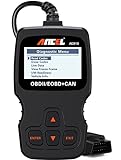
Reputable study materials and a scan tool to actually master this — honest picks, not filler.
Affiliate links — we earn a commission at no extra cost to you.
Want to look up a specific code? Browse all OBD-II codes · Read the repair guides · More quizzes
Educational use only. Always follow your vehicle's service information and safety precautions when diagnosing or repairing.