U0073 moderate

U0073 is a generic SAE-defined network (U-series) diagnostic trouble code that means "Control Module Communication Bus 'A' Off." Modern vehicles let their control modules (PCM/ECM, TCM, ABS, BCM, and others) talk to each other over a serial data network, typically a Controller Area Network (CAN) bus. U0073 sets when a module determines that communication on bus "A" has stopped — either the bus has gone "off" (no valid traffic) or the module can no longer transmit/receive on it. Because the fault is on the network itself rather than in one sensor, U0073 is frequently accompanied by several "lost communication" codes (for example U0100 ECM/PCM, U0101 TCM, U0121 ABS) as each module reports that it can no longer hear the others. The "A" designates a specific bus circuit; the related code U0074 covers bus "B." While the U0073 label and bus-off meaning are standardized, exactly which physical wires and modules sit on "bus A," and the precise enabling conditions, vary by manufacturer, so the make-specific service information and wiring diagram should be confirmed during diagnosis. The codes immediately above this range, U0075 through U00FF, are ISO/SAE reserved.

The U0073 code means the vehicle's onboard diagnostic system has detected: U0073 is a generic SAE-defined network (U-series) diagnostic trouble code that means "Control Module Communication Bus 'A' Off." Modern vehicles let their control modules (PCM/ECM, TCM, ABS, BCM, and others) talk to each other over a serial data network, typically a Controller Area Network (CAN) bus. U0073 sets when a module determines that communication on bus "A" has stopped — either the bus has gone "off" (no valid traffic) or the module can no longer transmit/receive on it. Because the fault is on the network itself rather than in one sensor, U0073 is frequently accompanied by several "lost communication" codes (for example U0100 ECM/PCM, U0101 TCM, U0121 ABS) as each module reports that it can no longer hear the others. The "A" designates a specific bus circuit; the related code U0074 covers bus "B." While the U0073 label and bus-off meaning are standardized, exactly which physical wires and modules sit on "bus A," and the precise enabling conditions, vary by manufacturer, so the make-specific service information and wiring diagram should be confirmed during diagnosis. The codes immediately above this range, U0075 through U00FF, are ISO/SAE reserved.. This is a moderate severity code.

My Garage →
Keep driving?
Short distances only
DIY difficulty
advanced
Estimated cost
Cost varies widely with the root cause. A wiring or connector repair is often the least expensive fix, while diagnosis time can be significant because network faults are intermittent and require module isolation. A failed control module that must be replaced and programmed is typically the most expensive outcome. No single reliable flat-rate figure could be sourced; obtain a quote after the specific fault is isolated.
Diagnose CAN Bus Issues
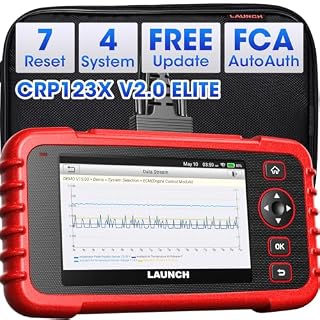
LAUNCH CRP123X Full System Scanner

Network codes mean modules are not communicating. You need a scanner that reads all systems to find the problem.

Check Price on Amazon

Affiliate link -- we earn a commission at no extra cost to you.

Common Symptoms

  • Illuminated check engine light (MIL)
  • Multiple simultaneous 'lost communication' / U-codes stored
  • Warning lights for systems that depend on the bus (ABS, traction control, airbag)
  • Reduced engine power or limp mode
  • No-start or no-crank condition in some cases
  • Transmission failing to shift or shifting erratically
  • Inoperative or erratic dashboard gauges and driver information displays
  • Intermittent loss of accessory functions (HVAC, body electronics) when the bus is involved

Probable Causes (Ranked by Likelihood)

  • Open, shorted, or chafed CAN bus wiring (CAN-High / CAN-Low), including short to power, short to ground, or the two lines shorted together high
  • Corroded, loose, backed-out, or damaged connector pins/terminals on a module or inline connector in the bus circuit high
  • A failed control module that has shorted the bus or stopped communicating (master/gateway module especially) medium
  • Missing or out-of-spec CAN terminating resistance (the network should typically read about 60 ohms across CAN-High and CAN-Low with the system off) medium
  • Low or unstable battery/system voltage or a poor ground affecting module power medium
  • Water intrusion or corrosion at a connector/module location medium
  • Interference or wiring damage from an improperly installed aftermarket accessory tapped into the bus low
  • Corrupted module software requiring reprogramming (manufacturer-dependent) low

Step-by-Step Diagnostic Procedure

  1. Scan all modules and record every stored DTC and freeze-frame data; note which modules still respond and which are missing (a module 'roll call' points to where the bus is broken).

  2. Look up manufacturer-specific service information and any applicable TSBs, and obtain the wiring diagram showing which modules and wires make up bus 'A' on the specific vehicle (GM bulletin 08-07-30-021E covers many 2007-2010 GM models).

  3. Inspect bus wiring and connectors for chafing, corrosion, backed-out pins, water intrusion, and prior repair splices; wiggle-test harnesses while watching for intermittent dropouts.

  4. With the ignition off (and per service procedure), measure resistance across the CAN-High and CAN-Low lines at the data link connector — about 60 ohms indicates the two terminating resistors are intact; ~120 ohms or open suggests a terminator or wiring fault.

  5. Check battery voltage and module grounds/power feeds; correct low voltage or bad grounds before further network diagnosis.

  6. Use a multimeter or oscilloscope at the DLC to verify CAN-High and CAN-Low signal activity and check for shorts to power, shorts to ground, or the lines shorted together.

  7. Isolate the fault by disconnecting modules one at a time (or splitting the bus per service info) to see whether communication is restored, which identifies a shorted module or harness segment.

  8. After repair, clear codes and recheck that all modules report and that U0073 does not return.

Common Fixes by Vehicle

What techs usually find when diagnosing U0073 on specific vehicles — tap your vehicle for the fix and the exact part:

2003-2014 Chevrolet Silverado/GMC Sierra hard DIY

U0073 (control module communication bus A off) on GM trucks means the high-speed GMLAN bus is not terminating. The #1 cause is a short in the CAN wiring, often at a chafed harness near the fuse box or a pinched wire under the intake. Unplug modules one at a time (ECM, TCM, BCM, EBCM) and check if U0073 clears -- the module that clears it is the one shorting the bus. Replace that module or repair its wiring.

Labor: 1-3 hours
2007-2014 Ford F-150/Expedition hard DIY

Ford U0073 typically indicates a shorted CAN bus wire, often at the firewall grommet or a pinched wire at a module connector. Disconnect the battery, then unplug modules one at a time and recheck -- isolating which module/circuit is pulling the bus down. Ford FORScan is extremely helpful here for watching module communication status live.

Labor: 1-3 hours
2005-2015 Dodge Ram 1500/2500 hard DIY

Ram U0073 is often caused by water intrusion into the TIPM (Totally Integrated Power Module) in the underhood fuse box. Dodge TIPMs are notorious for internal corrosion. Remove the cover, inspect for green corrosion on circuit traces, and replace or rebuild the TIPM if corroded. A dead TIPM can take down the entire CAN network and trigger U0073 plus a dozen other U-codes.

Labor: 2-4 hours

Frequently Asked Questions

Is U0073 a generic code or manufacturer-specific?

U0073 is a generic SAE-defined network (U-series) code meaning 'Control Module Communication Bus A Off,' so the core meaning is the same across makes. However, which physical wires and modules belong to 'bus A' and the exact set-conditions vary by manufacturer, so you should confirm the make-specific wiring diagram and service information during diagnosis.

What is the difference between U0073 and U0074?

Both indicate a communication bus is 'off,' but U0073 refers to bus 'A' and U0074 refers to bus 'B.' Many vehicles route different modules onto separate buses, so the letter tells you which network circuit to test.

Can I drive with a U0073 code?

It depends on which systems are affected. Because U0073 can disable communication to safety-related modules such as ABS, traction control, or the transmission — and can cause reduced power, a no-start, or warning lights — it should be diagnosed promptly. Limit driving to what is necessary until the network fault is found.

Why do I have several communication codes at once with U0073?

When a bus goes off, every module that relied on it reports that it lost contact with the others, so codes like U0100, U0121, or U0140 commonly appear alongside U0073. The pattern of which modules are missing helps locate the break in the network.

Is U0073 usually a bad module or a wiring problem?

Wiring and connector faults (opens, shorts, corrosion) are the most common causes. A failed module that shorts or stops driving the bus is possible but less common, which is why technicians verify wiring and the roughly 60-ohm CAN terminating resistance before condemning a module.

Sources

This page is built from documented references. Verify against your own service info before repair work.

U0073 on Diesel, EV & Equipment

The same code ID appears across other engines and platforms. The diagnostic flow varies by manufacturer — these are the platform-specific breakdowns:

See All Codes & Fixes for Your Vehicle

Explore More

Was this helpful?

Share carcodefinder.com with a friend who needs to decode their check engine light.